








What's Happening?
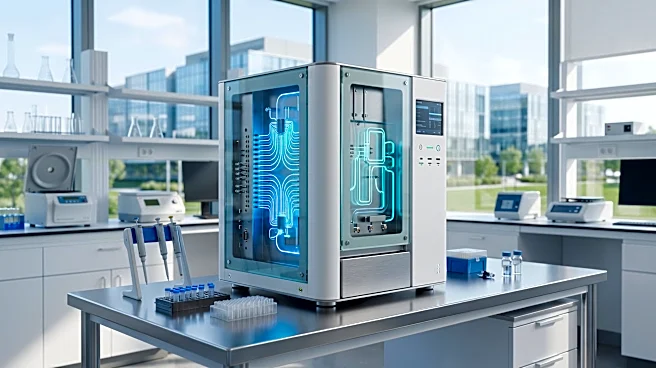
The global arrayed Clustered Regularly Interspaced Short Palindromic Repeats (CRISPR) screening market is experiencing significant growth, driven by increased adoption of functional genomics technologies by pharmaceutical companies, biotechnology businesses,
and research institutions. The market is projected to expand from $1.52 billion in 2025 to $1.79 billion in 2026, demonstrating a compound annual growth rate (CAGR) of 17.5%. This growth is supported by the expansion of functional genomics research, greater availability of CRISPR editing reagents, and increased investment in academic screening programs. The market is forecast to reach $3.43 billion by 2030, with a CAGR of 17.7%. Key market offerings include CRISPR libraries, reagents, consumables, screening instruments, software, and specialized services. Major applications span functional genomics, drug discovery, disease modeling, and gene validation, with demand primarily from pharmaceutical and biotechnology companies, academic and research institutes, and contract research organizations.
Why It's Important?
This rapid expansion of the arrayed CRISPR screening market is crucial for the U.S. pharmaceutical and biotechnology industries, as it directly supports the acceleration of precision drug discovery and gene therapy research. The increased demand for these technologies allows for more targeted and effective development of treatments, potentially leading to breakthroughs in addressing various diseases. U.S. companies like Thermo Fisher, Merck, and Agilent are positioned to capitalize on this growth, enhancing their capabilities in drug development and contributing to the nation's leadership in biomedical innovation. The emphasis on personalized medicine, driven by advances in genomics and molecular diagnostics, means that researchers can identify patient-specific drug targets and assess treatment responses more effectively. This not only improves the efficacy of new therapies but also has the potential to reduce healthcare costs in the long run by minimizing trial-and-error approaches in treatment. The growth also signifies a robust investment in research infrastructure and collaborative efforts between academic institutions and commercial organizations, fostering a dynamic ecosystem for scientific advancement.
What's Next?
The market is expected to continue its upward trajectory, driven by rising demand for precision drug discovery, sustained investment in gene therapy research, and broader disease-modeling applications. Future trends include the growing adoption of targeted gene-validation screens, high-throughput arrayed assays, and advanced phenotypic data analytics. There will also be an increased focus on functional genomics accuracy, automated workflows, and sophisticated imaging technologies to generate reproducible results at scale. Companies and research institutions will likely prioritize strategies to boost return on investment through partnerships, automation, custom screening, and bioinformatics. This will involve localizing reagent and equipment production to reduce costs and accelerate target validation. The ongoing development of personalized medicine will further fuel demand for research tools that can identify patient-specific drug targets and support the development of therapies aligned with individual genetic and cellular profiles.
Beyond the Headlines
The growth of the arrayed CRISPR screening market has profound implications beyond immediate financial gains. Ethically, the advancements in precision drug discovery and gene therapy raise questions about equitable access to these highly specialized treatments and the potential for exacerbating healthcare disparities. Legally, the increasing complexity of gene-editing technologies necessitates robust regulatory frameworks to ensure safety, efficacy, and responsible innovation. Culturally, the ability to precisely manipulate genetic material could shift societal perceptions of disease, treatment, and human enhancement. The long-term shift towards personalized medicine, enabled by these technologies, could fundamentally transform healthcare delivery, moving from a one-size-fits-all approach to highly individualized interventions. This also implies a greater need for public education and engagement to ensure informed discussions about the ethical and societal implications of these powerful scientific tools.