




What's Happening?
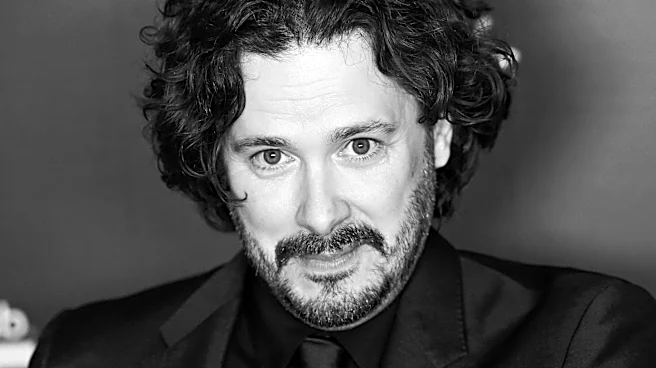
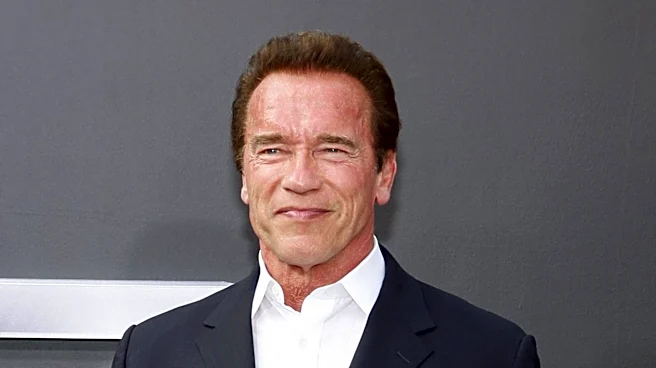
Filmmaker Edgar Wright has directed the 2025 adaptation of Stephen King's novel, "The Running Man," co-writing the script with Michael Bacall. This new film aims for a more faithful rendition of the 1982 novel compared to the 1987 Arnold Schwarzenegger
version. The movie features Glen Powell in the lead role of Ben Richards, alongside a supporting cast including Josh Brolin, William H. Macy, Michael Cera, and Colman Domingo. The narrative explores themes of a police-surveillance state, video drones, and a casino economy, which are noted to be highly relevant in 2025. Despite the updated themes and a longer runtime of 133 minutes, some critics have expressed reservations about the film's action sequences and its overall execution, particularly regarding the portrayal of the revolution at the end.
Why It's Important?
The release of a new adaptation of "The Running Man" by a prominent director like Edgar Wright is significant for the entertainment industry, particularly in the realm of science fiction and dystopian cinema. The film's attempt to offer a more faithful and contemporary interpretation of King's novel could set a precedent for future adaptations of classic works, emphasizing thematic relevance over action-centric spectacle. The casting of Glen Powell in a physically demanding role also highlights evolving standards of male physique in Hollywood, prompting discussions about realism in character portrayal. The film's exploration of a surveillance state and economic inequality reflects current societal anxieties, potentially influencing public discourse on these issues and shaping audience expectations for genre films that tackle complex social commentary.
What's Next?
The reception of "The Running Man (2025)" will likely influence Edgar Wright's future directorial choices and the types of projects he undertakes. If the film garners critical acclaim and commercial success, it could solidify his reputation for handling complex adaptations and potentially lead to more opportunities in the dystopian genre. Conversely, if the mixed reviews persist, it might prompt a re-evaluation of his approach to adapting existing material. The film's performance could also impact the trend of remaking or re-adapting classic science fiction novels, with studios observing whether a more faithful, thematically rich approach resonates with modern audiences. Discussions around the film's political messages and its portrayal of societal issues are expected to continue, potentially sparking further debate among critics and viewers.
Beyond the Headlines
Beyond its immediate cinematic impact, "The Running Man (2025)" touches upon deeper cultural and ethical implications. The film's depiction of a society grappling with a police-surveillance state and a casino economy underscores growing concerns about privacy, government overreach, and economic disparity in the real world. The narrative's commentary on propaganda, including the prophetic mention of deep fake videos in King's original work, highlights the enduring relevance of media manipulation and its impact on public perception. The film also implicitly critiques Hollywood's often unrealistic body standards for actors, prompting a broader conversation about authenticity and representation in cinema. The mixed critical response to the film's revolutionary ending suggests a societal ambivalence towards radical change, reflecting contemporary debates about effective political action and the nature of social transformation.