



What's Happening?
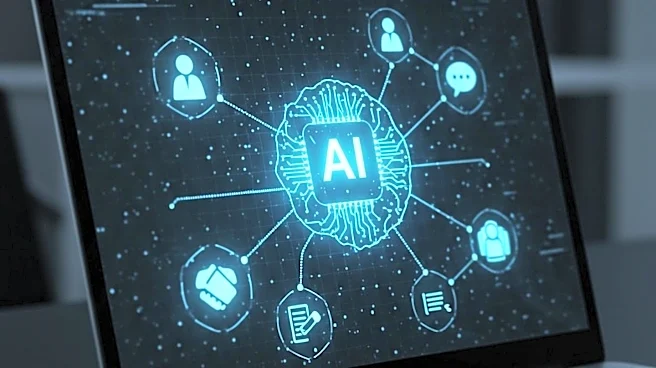
ServiceNow has significantly evolved its enterprise AI platform, moving beyond traditional automation to foster an 'autonomous workforce' where AI agents, enterprise systems, and employees collaborate. The platform integrates AI directly into workflows,
data, governance, and operational processes to create intelligent, connected operations. Key components include ServiceNow Otto, a conversational AI assistant for unified user interaction; specialized AI Agents designed to perform operational work across various departments like IT, customer service, and HR; and the Super Intelligence Control Tower for centralized AI oversight and compliance. The platform also leverages RaptorDB for real-time data analytics and Process Mining to identify workflow inefficiencies. This comprehensive approach aims to augment human capabilities, allowing employees to focus on higher-value tasks while AI handles routine execution, thereby transforming IT operations, strengthening security, improving customer experiences, and enhancing employee services.
Why It's Important?
This evolution of ServiceNow's AI platform is crucial for U.S. enterprises facing increasing complexity from cloud adoption, distributed infrastructure, and rising service expectations. By enabling AI to understand context, access secure enterprise data, and participate in end-to-end workflows, businesses can overcome challenges like siloed systems, disconnected workflows, and inconsistent customer experiences. The platform's ability to automate repetitive activities through AI Agents leads to faster and more consistent service delivery, directly impacting operational efficiency and cost reduction. Enhanced governance through the Super Intelligence Control Tower ensures AI adoption scales responsibly, maintaining trust and compliance. This shift empowers U.S. companies to optimize technology investments, reduce operational risks, and deliver smarter experiences for both customers and employees, fostering a more agile and competitive business environment.
What's Next?
The continued adoption of ServiceNow's enhanced AI platform is expected to drive further digital transformation across U.S. industries. Businesses will likely focus on integrating AI Agents into more complex operational workflows, expanding their use beyond current applications in IT, HR, and customer service. The emphasis on responsible AI practices, including human-centered design, transparency, and robust security, will guide future implementations, ensuring ethical and secure AI deployment. Organizations will also leverage Process Mining more extensively to continuously optimize workflows and improve AI performance, leading to more data-driven operational decisions. Future developments may include more specialized AI Agents tailored to specific industry needs, further enhancing efficiency and innovation in sectors like financial services, healthcare, and manufacturing.
Beyond the Headlines
The deeper implications of ServiceNow's platform extend to a fundamental shift in the nature of work within U.S. enterprises. The concept of an 'autonomous workforce' suggests a future where human-AI collaboration becomes the norm, potentially redefining job roles and skill requirements. This could lead to a greater demand for employees with skills in AI oversight, data analysis, and complex problem-solving, as routine tasks are increasingly handled by AI. Ethically, the Super Intelligence Control Tower highlights the growing importance of AI governance, ensuring accountability and mitigating risks associated with AI decision-making. Culturally, the integration of conversational AI like ServiceNow Otto could reshape how employees interact with enterprise services, fostering a more intuitive and efficient digital workplace experience. This evolution also underscores the long-term trend of AI moving from a supplementary tool to an integral, collaborative partner in business operations.