





What's Happening?
The global semiconductor process components market is projected to grow from $90.03 billion in 2026 to $153.32 billion by 2032, exhibiting a Compound Annual Growth Rate (CAGR) of 9.33%. This growth is primarily driven by the increasing complexity of device
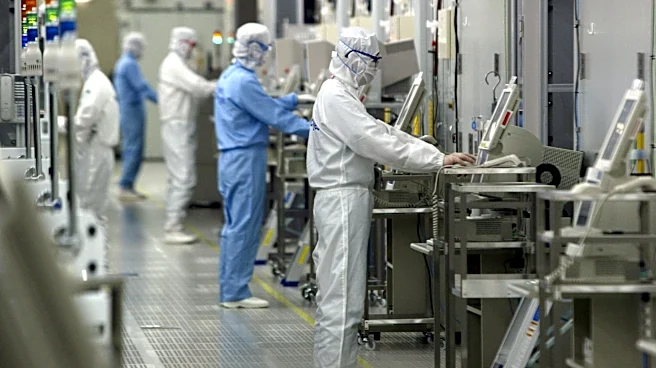
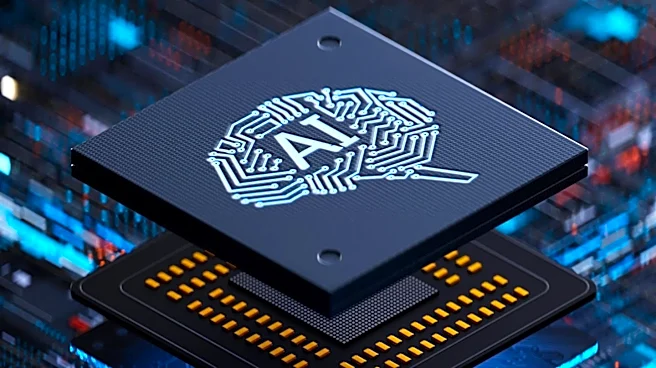
architectures, tighter process tolerances, advancements in packaging technologies, and the growing demand for more resilient supply chains. Semiconductor process components are precision parts essential for various stages of wafer fabrication, including deposition, etching, cleaning, lithography, and thermal processing. Their performance directly impacts process stability, contamination control, production yield, and equipment reliability. Artificial intelligence (AI) is playing a crucial role in advancing equipment monitoring, predictive maintenance, defect classification, and process optimization within semiconductor manufacturing. Regional market priorities vary, with North America focusing on domestic manufacturing, advanced-node capacity, and supply-chain resilience.
Why It's Important?
The significant expansion of the semiconductor process components market is critical for the U.S. technology sector and its national security interests. As semiconductor manufacturing becomes more complex and vital for advanced technologies like AI and high-performance computing, the reliability and availability of these precision components are paramount. North America's focus on domestic manufacturing and supply-chain resilience directly addresses concerns about geopolitical risks and ensures a stable supply of critical components for U.S. industries. This growth supports the development of advanced-node fabrication capabilities within the U.S., which is essential for producing cutting-edge chips for defense, aerospace, and commercial applications. The integration of AI into manufacturing processes can lead to higher yields and reduced costs, enhancing the competitiveness of U.S. semiconductor producers. Conversely, the high performance and qualification requirements for these components necessitate continuous investment in research and development, posing a challenge for companies to keep pace with technological advancements.
What's Next?
The industry will continue to see increased performance and qualification requirements for components due to advanced-node fabrication. There will be sustained demand for dependable lifecycle performance in mature-node production, power semiconductors, sensors, and specialty devices. Regional manufacturing expansion will encourage multisupplier qualification and localized technical services, particularly in North America. Artificial intelligence will further advance equipment monitoring, predictive maintenance, and process optimization, with machine-learning models connecting component condition to chamber performance and process drift. AI-assisted simulation will shorten development cycles for complex component geometries and coatings. Adoption of these AI technologies will depend on reliable sensor data, cybersecurity, validated models, and compatibility with established manufacturing controls. Strategic priorities for industry participants will include supplier diversification, predictive maintenance, digital traceability, and faster qualification processes.
Beyond the Headlines
The reliance on highly specialized and precise components in semiconductor manufacturing highlights the intricate and interdependent nature of the global technology supply chain. The push for AI integration in manufacturing not only boosts efficiency but also raises questions about the future of human labor in these highly automated environments. The emphasis on supply chain resilience and domestic manufacturing in North America reflects a broader geopolitical strategy to reduce vulnerabilities and secure critical technological capabilities. This could lead to a re-shoring or near-shoring of manufacturing activities, impacting global trade patterns and fostering regional economic blocs. The continuous innovation in materials engineering and surface treatment for components also points to the ongoing scientific frontier in developing materials that can withstand extreme manufacturing conditions, pushing the boundaries of material science.