










What's Happening?
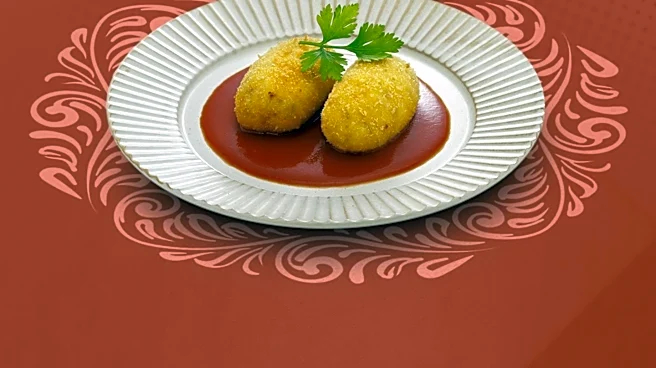
The popularity of chicken cutlets on social media platforms like TikTok and Instagram has overshadowed the rich tradition of Italian American fried foods. While these platforms showcase nonnas frying chicken cutlets, the broader spectrum of Italian frying traditions,
such as fritto misto, arancini, and panzerotti, remains underrepresented. Historically, frying was a staple in Italian cuisine, especially in Naples, where street food was predominantly fried due to economic constraints. This tradition was carried over by Italian immigrants to the U.S., but over time, the variety of fried foods diminished, leaving mainly the chicken cutlet as a popular dish. This shift is attributed to the practicality of making cutlets in small kitchens and the influence of American dietary norms.
Why It's Important?
The focus on chicken cutlets highlights a broader trend of simplifying and Americanizing ethnic cuisines, which can lead to the loss of culinary diversity. This phenomenon reflects how immigrant communities adapt their food traditions to fit new cultural and economic environments. The reduction of Italian American frying traditions to primarily chicken cutlets underscores the impact of assimilation and the pressures to conform to mainstream dietary practices. This trend also points to a potential loss of cultural heritage, as younger generations may not be exposed to the full range of traditional Italian fried foods.
What's Next?
As social media continues to influence food trends, there may be a resurgence of interest in traditional Italian fried foods if content creators choose to highlight these dishes. This could lead to a revival of forgotten recipes and a renewed appreciation for the diversity of Italian American cuisine. Additionally, as health-conscious trends like air frying gain popularity, there may be innovative adaptations of traditional recipes to fit modern dietary preferences, potentially bridging the gap between tradition and contemporary health trends.
Beyond the Headlines
The simplification of Italian American cuisine to dishes like chicken cutlets raises questions about cultural preservation and the role of food in maintaining ethnic identity. As communities evolve, there is a risk that unique culinary practices may be lost, leading to a homogenized food culture. This trend also reflects broader societal shifts towards convenience and visual appeal in food, driven by social media. The challenge lies in balancing the preservation of traditional practices with the demands of modern lifestyles.