
What's Happening?
Tesla has entered into credit agreements totaling $30 billion, as disclosed in a recent regulatory filing. This substantial financing package includes a $20 billion delayed draw-term loan facility, an $8
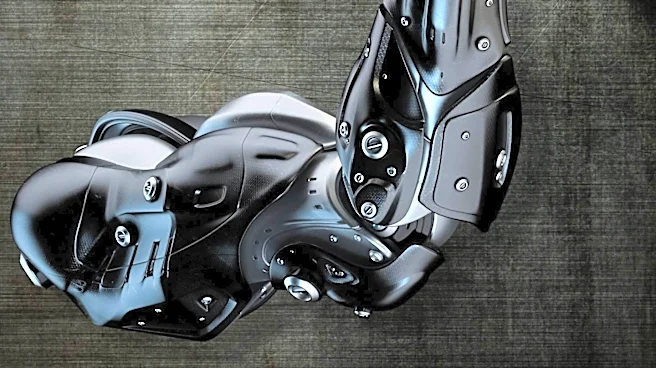
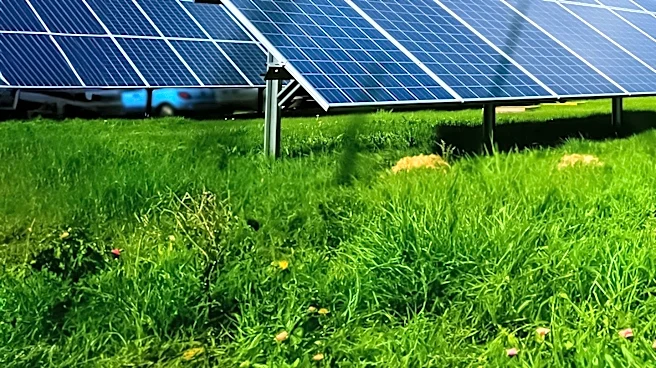
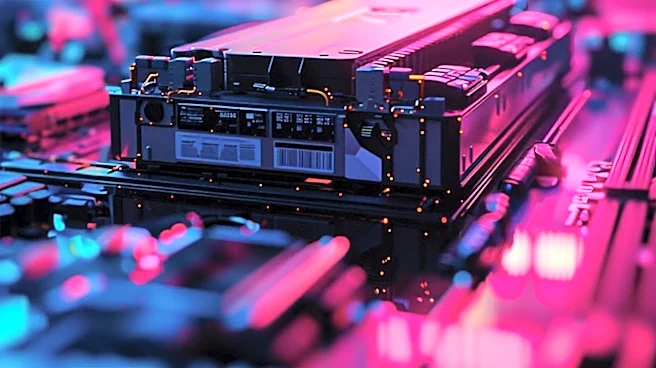
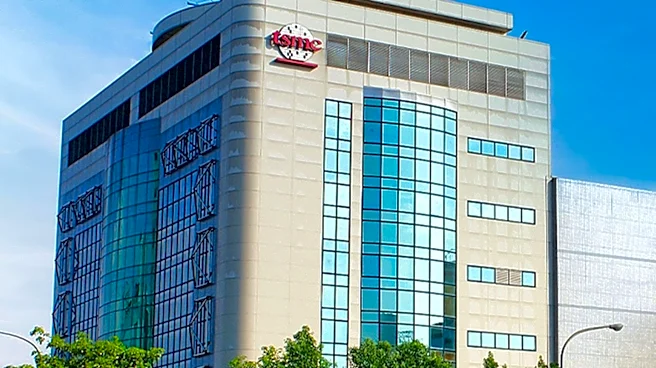
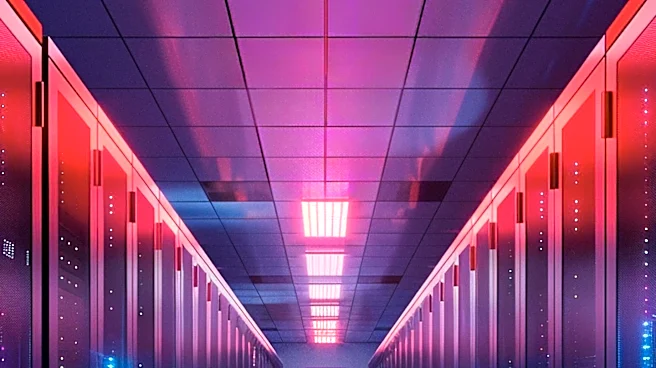
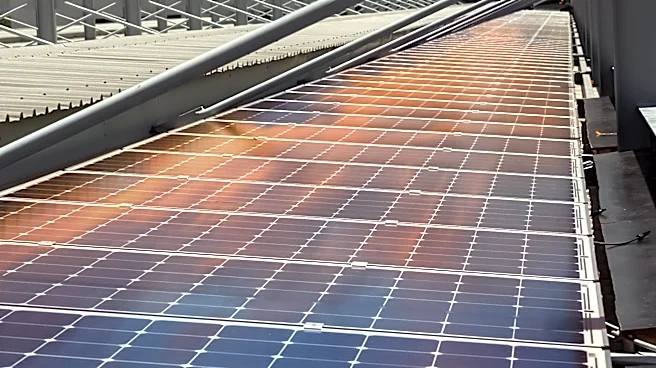
billion five-year revolving credit facility, and a $2 billion 364-day revolving credit facility. The company plans to allocate a significant portion of its record spending this year towards artificial intelligence (AI) compute infrastructure, solar cell-manufacturing capacity, and a semiconductor fabrication project in collaboration with SpaceX. These investments are aimed at supporting Tesla's ambitious expansion plans, including the development of generation products like Optimus and Cybercabs, and the construction of large-scale infrastructure projects such as the Terafab. While these credit facilities provide substantial financial backing, Tesla does not anticipate drawing on them in 2026.
Why It's Important?
This $30 billion credit agreement underscores Tesla's aggressive push into advanced technology and manufacturing, signaling a strategic pivot towards becoming a leader in AI and sustainable energy production beyond its core automotive business. The significant investment in AI compute infrastructure highlights the company's commitment to developing sophisticated autonomous systems and robotics, which could revolutionize various industries. Furthermore, the focus on solar cell manufacturing and semiconductor fabrication indicates a move towards greater vertical integration, potentially reducing reliance on external suppliers and enhancing control over its supply chain. This could lead to cost efficiencies and faster innovation cycles. The funding for projects like Optimus and Cybercabs suggests Tesla is preparing to launch new product lines that could disrupt traditional markets, from personal robotics to autonomous transportation services. This financial maneuver positions Tesla to accelerate its growth and solidify its competitive edge in rapidly evolving technological landscapes.
What's Next?
Tesla is expected to direct a substantial portion of its capital expenditures towards the outlined initiatives, including AI compute infrastructure, solar cell manufacturing, and the semiconductor fabrication project with SpaceX. The company's progress in these areas will likely be closely monitored by investors and industry analysts, as successful execution could significantly impact its future market position and profitability. The development of new generation products like Optimus and Cybercabs will also be a key focus, with potential announcements regarding their launch and deployment. While Tesla does not plan to draw on these credit facilities in 2026, the availability of such substantial funding provides a strong financial buffer for future strategic investments and operational needs. The market will be watching for updates on the construction of the Terafab and the scaling of solar cell production, which are critical components of Tesla's long-term vision.
Beyond the Headlines
The scale of Tesla's credit agreements and its investment priorities suggest a broader strategic shift that could have profound implications for the U.S. technology and manufacturing sectors. By investing heavily in AI and semiconductor fabrication, Tesla is not only enhancing its own capabilities but also contributing to the domestic development of critical technologies. This could bolster U.S. competitiveness in advanced manufacturing and reduce reliance on foreign supply chains, particularly in the semiconductor industry. The emphasis on solar cell manufacturing aligns with national goals for renewable energy and could accelerate the transition to a more sustainable economy. Furthermore, the development of advanced robotics like Optimus could redefine labor markets and industrial automation, raising ethical considerations about the future of work. Tesla's integrated approach, combining automotive, energy, and AI, positions it as a multifaceted technology conglomerate, potentially setting new benchmarks for innovation and industrial strategy in the coming decade.