









What's Happening?
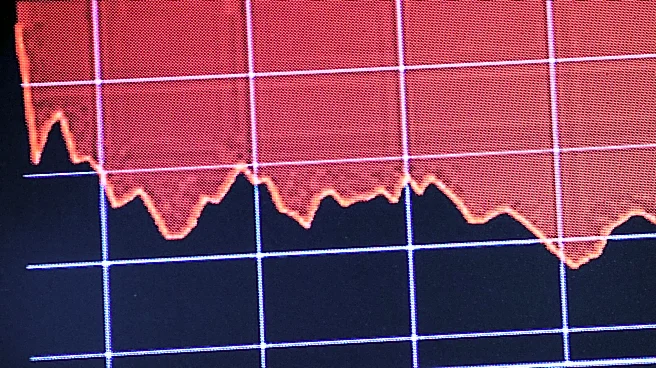
The artificial intelligence (AI) sector is experiencing financial instability as global stock markets face a downturn. This decline began with a significant drop in the share prices of major tech companies like Alphabet, Samsung, and SK Hynix. The selloff
has been attributed to concerns over high spending plans and weakening demand for high-bandwidth memory products, which are crucial for AI applications. Despite these challenges, the AI sector has not yet experienced a catastrophic crash. The downturn has affected the stock market globally, with significant impacts on the U.S. market, where the tech sector plays a pivotal role in economic performance. Notably, the share prices of some chip companies have seen substantial gains earlier this year, which have cushioned the impact of the recent declines.
Why It's Important?
The financial turbulence in the AI sector is significant due to its potential impact on the broader economy. The tech sector, particularly AI, has been a major driver of stock market growth, and any instability could have widespread economic implications. The downturn affects not only tech companies but also investors and retirement accounts tied to these stocks. Additionally, the cost of consumer electronics could rise as chipmakers prioritize sales to the AI industry, which offers higher profit margins. The situation highlights the interconnectedness of global markets and the influence of tech companies on economic stability.
What's Next?
The future of the AI sector remains uncertain, with potential for recovery or further decline. A U.S. chipmaker recently reported strong earnings, suggesting that recovery might be on the horizon. However, continued market volatility could lead to more significant financial consequences. Stakeholders, including investors and tech companies, will be closely monitoring market trends and adjusting strategies accordingly. The situation also raises questions about regulatory responses and the need for measures to stabilize the tech sector and protect economic interests.