





What's Happening?
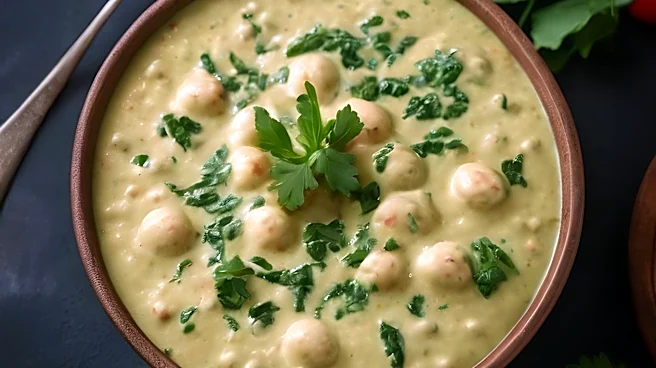
Knoephla soup, a traditional German dumpling soup, is gaining recognition for its deep cultural roots and popularity in North Dakota. The soup, whose name loosely translates to 'little buttons' in German, features dough balls (dumplings) in a creamy potato
base, often enriched with fresh chopped dill. This dish is a staple in many North Dakota diners and is cherished by residents, reflecting the culinary heritage of Germans from Russia who settled in the region during the 19th century. Reviewers frequently praise its rich, creamy texture and comforting qualities, with many recalling it as a beloved dish from their childhood or local eateries.
Why It's Important?
The enduring popularity of Knoephla soup in North Dakota highlights the significant cultural impact of German-Russian immigrants on the region's culinary landscape. This dish is more than just food; it represents a tangible connection to the heritage and traditions of a specific immigrant group, preserving their history through taste and shared experience. For the food industry, the demand for such traditional dishes can support local businesses, from restaurants to ingredient suppliers, and foster culinary tourism. It also underscores the value of regional specialties in a broader national food culture, demonstrating how specific communities maintain and celebrate their unique identities through cuisine. The emotional connection many residents have to Knoephla soup speaks to its role in community bonding and the transmission of cultural memory across generations.
What's Next?
The continued appreciation for Knoephla soup suggests a potential for broader culinary recognition beyond North Dakota. As interest in regional American cuisine grows, traditional dishes like Knoephla could see increased visibility in food media, cookbooks, and even restaurant menus across the country. Local food festivals and cultural events in North Dakota are likely to continue featuring Knoephla soup, further cementing its status as a regional icon. There may also be opportunities for local producers to market ready-to-make Knoephla kits or frozen versions, catering to those who wish to enjoy the soup at home without the full preparation process. The ongoing sharing of recipes and personal stories related to the soup will ensure its cultural legacy endures.
Beyond the Headlines
The story of Knoephla soup in North Dakota delves into the deeper narrative of cultural assimilation and preservation within the United States. It illustrates how immigrant communities, while adapting to a new country, often maintain and celebrate their distinct traditions, particularly through food. This culinary persistence serves as a powerful reminder of the diverse origins that contribute to the American cultural mosaic. The soup's comfort-food status also speaks to the universal human need for connection and nostalgia, often found in familiar tastes and aromas. Ethically, it highlights the importance of recognizing and valuing the contributions of all cultural groups to the national identity, ensuring that their stories and traditions are not lost but celebrated and passed down.