




What's Happening?
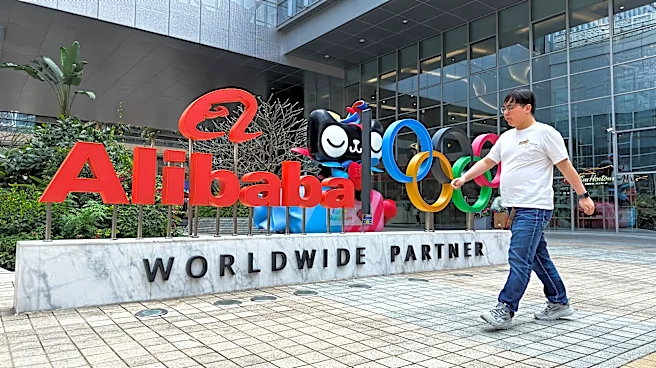
Alibaba, a major Chinese technology company, has announced a ban on its employees from using the Claude Code programming tool developed by the U.S.-based company Anthropic. This decision, effective from July 10, is part of a broader strategy to address
security concerns and reflects ongoing tensions in the global artificial intelligence market. Anthropic had previously restricted access to its models for Chinese companies, but users found ways to bypass these restrictions. In response, Anthropic is working to close these loopholes. The Claude Code tool was identified as 'high-risk software' by Alibaba, prompting the company to recommend its employees use an internally developed tool, Qoder, to prevent data leaks and enhance technological independence.
Why It's Important?
This development highlights the intensifying 'technological cold war' between the U.S. and China, particularly in the AI sector. By banning the use of Claude Code, Alibaba is taking steps to reduce reliance on foreign technology, which could have significant implications for the global AI market. This move underscores the strategic importance of technological self-sufficiency for Chinese companies amid geopolitical tensions. For U.S. companies like Anthropic, this situation emphasizes the need to protect their technologies from being accessed by strategic competitors. The broader impact could lead to a more fragmented AI market, with companies increasingly developing and relying on domestic technologies.
What's Next?
As Alibaba and other Chinese companies continue to develop their own technological solutions, the AI market may see further regionalization. This could lead to increased competition between U.S. and Chinese tech firms, each striving to establish dominance in their respective markets. For Anthropic, the focus will likely remain on enhancing security measures to prevent unauthorized access to its tools. The ongoing developments could prompt other companies to reassess their security protocols and technological dependencies, potentially leading to a shift in how global tech companies operate and collaborate.