







What's Happening?
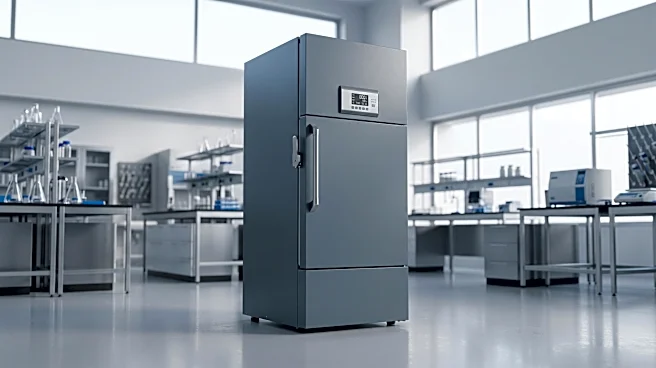
Reflect Scientific, Inc., operating under its Cryometrix brand, has introduced the PF-90 Blast Plate Freezer. This new ultra-low temperature system integrates two distinct freezing technologies: liquid nitrogen (LN2) blast freezing and conductive plate
freezing, into a single unit. The PF-90 is specifically engineered for facilities that handle biopharmaceuticals, biologics, vaccines, plasma, blood products, and materials used in cell and gene therapy, all of which necessitate rapid, uniform, and repeatable freezing processes. Historically, facilities had to choose between blast freezers, suitable for mixed or irregularly shaped loads, and plate freezers, which use direct-contact cooling for uniform, flat-frozen bags. The PF-90 aims to eliminate this trade-off by combining both methods, allowing operators to select the most appropriate freezing technique for each application. The system operates within a temperature range of 40°C to -90°C, with a peak variation from setpoint of ±2°C. It boasts a pull-down time of approximately 10 minutes from ambient to -80°C and a door-opening recovery time of about 1 minute to return to -80°C after being open for 3 minutes. The PF-90's cooling system utilizes Cryometrix's proprietary LN2 technology, which avoids compressors and circulated refrigerants, thereby reducing mechanical failure points, electrical consumption, and heat output.
Why It's Important?
The introduction of the PF-90 Blast Plate Freezer is significant for the U.S. biopharmaceutical and cell therapy industries. By combining two freezing technologies, the system offers enhanced flexibility and efficiency, potentially reducing capital costs, floor space requirements, and operational complexity for facilities. This innovation addresses a critical need for precise and consistent freezing in the handling of sensitive biological materials, where even minor temperature variations can compromise product integrity and regulatory compliance. The demand for ultra-low temperature freezing equipment is growing, driven by the expansion of biologics, cell and gene therapy, and blood product processing sectors. The global blast freezer market is projected to reach $2.58 billion by 2032, and the biomedical refrigerator and freezer market is estimated to grow to $4.8 billion in 2026. Reflect Scientific's new product positions it to capture a share of this expanding market, offering a solution that could streamline operations and improve the quality control of vital medical products. The system's design, which avoids compressors, also offers environmental and cost benefits through reduced electrical demand and heat generation, aligning with broader industry trends towards more sustainable and efficient technologies.
What's Next?
The PF-90 Blast Plate Freezer is now available, with pricing provided upon request directly from Cryometrix. The company will likely focus on marketing and sales efforts to biopharmaceutical manufacturers, blood banking and transfusion centers, cell and gene therapy facilities, and research laboratories across the U.S. and potentially internationally. Given the patent-pending status of the PF-90, Reflect Scientific will continue to secure its intellectual property, which could provide a competitive advantage in the specialized ultra-low temperature freezing market. The company also offers an optional 21 CFR Part 11 compliance package, indicating its readiness to meet stringent regulatory requirements, which will be crucial for adoption in regulated environments. Future developments may include further enhancements to the system based on user feedback and evolving industry needs, as well as potential partnerships to expand its market reach. The 20-year warranty on the cooling system, including control valve replacement and virtual technical support, suggests a long-term commitment to product reliability and customer service, which could foster strong customer relationships and market penetration.
Beyond the Headlines
The PF-90's dual-technology approach represents a deeper shift in how critical biological materials are preserved, moving towards more integrated and adaptable solutions. The ability to choose between blast and plate freezing within a single unit not only optimizes the freezing process for diverse materials but also highlights a growing trend in the biotechnology sector towards multi-functional equipment that can reduce infrastructure footprint and operational overhead. This innovation could set a new standard for efficiency and precision in biopreservation, potentially influencing regulatory guidelines and best practices for handling sensitive biologics. Furthermore, the reliance on LN2 technology without compressors points to a broader industry movement away from traditional refrigeration methods that are often energy-intensive and can have a larger environmental impact. This could contribute to more sustainable practices within the pharmaceutical and medical research fields. The long-term implications include improved efficacy and safety of cell and gene therapies, vaccines, and blood products, as consistent and rapid freezing is paramount to maintaining their therapeutic properties and extending their shelf life. This technological advancement ultimately supports the development and delivery of life-saving treatments and diagnostics.