





What's Happening?
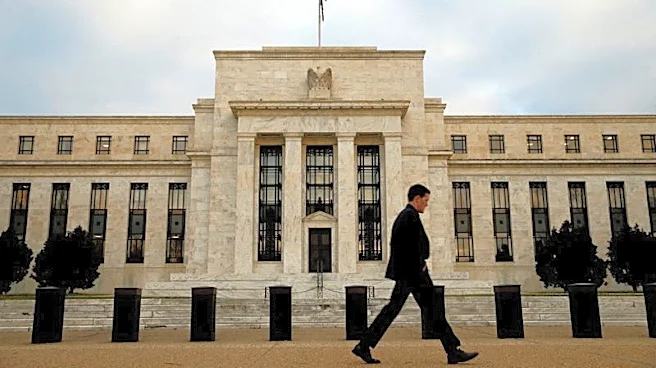
The Federal Reserve System, established in 1913 and headquartered in Washington, DC, serves as the central bank of the United States. This government agency is tasked with several critical responsibilities, including the formulation of national monetary
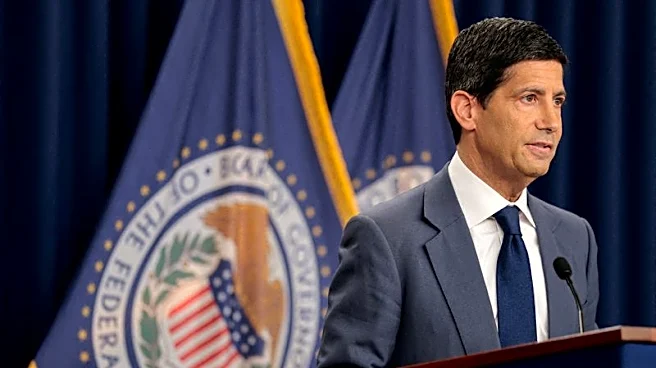
policy, the supervision and regulation of banks, and the provision of financial services to both banks and the U.S. government. The Federal Reserve Board of Governors, located in Washington, DC, acts as the primary governing body for the entire system. A key component of this system is the Federal Reserve Bank of New York, which oversees the Second Federal Reserve District. This district encompasses New York State, portions of New Jersey and Connecticut, as well as Puerto Rico and the U.S. Virgin Islands. The Federal Reserve System maintains a diverse workforce and offers various career opportunities across its numerous locations throughout the United States, contributing to its broad operational reach and influence.
Why It's Important?
The Federal Reserve System's role as the central bank is paramount to the stability and health of the U.S. economy. Its ability to formulate national monetary policy directly influences interest rates, inflation, and economic growth, impacting businesses, consumers, and investors nationwide. Through its supervisory and regulatory functions, the Federal Reserve helps ensure the soundness and safety of the banking system, preventing financial crises and protecting depositors. The financial services it provides are essential for the smooth functioning of the banking sector and the government's fiscal operations. Any decisions made by the Federal Reserve Board of Governors or actions taken by its regional banks, like the Federal Reserve Bank of New York, can have significant ripple effects across U.S. industries, financial markets, and the daily economic lives of American citizens. Its influence extends to employment levels, investment decisions, and the overall economic outlook.
What's Next?
The Federal Reserve will continue to monitor economic indicators closely to adjust monetary policy as needed, responding to inflation trends, employment data, and global economic developments. Future actions could include changes to the federal funds rate, adjustments to quantitative easing or tightening programs, and modifications to banking regulations. These decisions will be communicated through official statements and press conferences, providing guidance to financial markets and the public. Stakeholders, including businesses, investors, and consumers, will closely watch these announcements for signals regarding future economic conditions. The Federal Reserve's ongoing commitment to maintaining a strong economy and a stable financial system means its policies will remain a central focus for economic observers and participants across the United States.
Beyond the Headlines
Beyond its immediate economic functions, the Federal Reserve System plays a crucial, often understated, role in maintaining public confidence in the U.S. financial system. Its independence from direct political influence is a cornerstone of its effectiveness, allowing it to make decisions based on economic data rather than short-term political pressures. This independence, however, also occasionally leads to debates about accountability and transparency. The Federal Reserve's extensive research and data collection efforts provide invaluable insights into economic trends, shaping academic understanding and informing policy discussions beyond its direct mandates. Its role in fostering financial stability also has broader societal implications, as economic downturns disproportionately affect vulnerable populations, making the Fed's actions critical for social equity and stability.