







What's Happening?
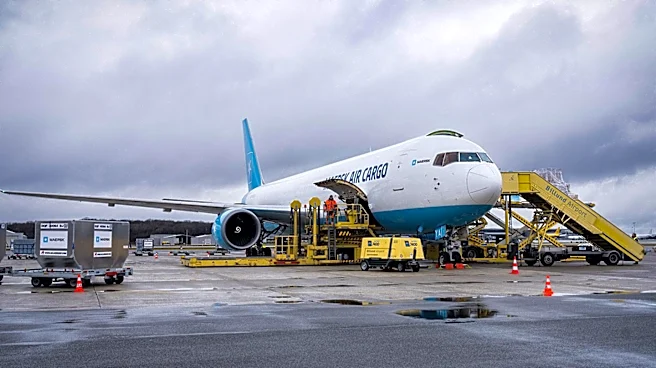
DHL Aviation has inaugurated a new weekly direct freighter service connecting Bahrain and Johannesburg. The first flight, operated by a DHL Express Boeing 767 freighter, landed at OR Tambo International Airport in Johannesburg. This new route is a strategic
move by DHL to enhance air cargo connectivity between the Middle East and Sub-Saharan Africa. The service aims to increase cargo capacity and establish a direct link between Gulf markets and South Africa. This initiative is part of DHL's broader investment in strengthening its Sub-Saharan Africa network, expanding its capability for heavier-weight shipments. The company emphasizes that this investment reflects evolving global supply chains, where businesses are diversifying their sourcing, manufacturing, and customer markets beyond traditional trade routes. Bahrain's geographical position as a gateway between Africa, the Gulf, and Asia is highlighted as a key motivator for establishing this new lane, offering customers additional options for accessing international markets. Johannesburg is considered a vital hub within DHL's Sub-Saharan Africa network, linking South Africa and neighboring regions to DHL's global operations, now with an added connection through Bahrain.
Why It's Important?
This new direct air cargo route is significant for several reasons. It directly addresses the growing demand for faster and more reliable international logistics services across various sectors, including healthcare, technology, manufacturing, and cross-border e-commerce. By providing increased inbound and outbound cargo capacity for South Africa and its neighboring countries, the service facilitates smoother trade flows. The investment underscores the deepening economic ties between Africa and the Middle East, recognizing South Africa as a 'Geographic Tailwind' market with increasing importance in global trade. For businesses, this means more direct access to burgeoning trade corridors and greater operational flexibility. The diversification of global supply chains, moving away from traditional routes, is a key driver for such investments, allowing companies to explore new sourcing and customer markets. DHL's position as the sole logistics provider operating a dedicated intra-regional air fleet across the Middle East, connecting through Bahrain to major global gateways like Hong Kong, Leipzig, and Cincinnati, further solidifies its role in shaping international trade logistics.
What's Next?
The establishment of this new weekly service is expected to lead to a more robust and efficient logistics network for businesses operating between the Middle East and Sub-Saharan Africa. DHL will likely continue to monitor trade volumes and market demand to potentially expand the frequency or capacity of this route, or introduce similar direct connections to other emerging markets. The enhanced connectivity could stimulate further economic growth and trade diversification in the region, encouraging more businesses to explore opportunities in these markets. Stakeholders, including businesses in the healthcare, technology, manufacturing, and e-commerce sectors, can anticipate improved transit times and reliability for their shipments. This development may also prompt competitors to re-evaluate their own network strategies in response to DHL's strengthened presence in the Middle East-Africa corridor, potentially leading to further improvements in regional air cargo services.
Beyond the Headlines
The launch of this direct freighter service signifies a broader trend of re-globalization and the strategic importance of regional hubs in facilitating international trade. Bahrain's role as a critical logistics gateway is reinforced, highlighting its potential to serve as a nexus for trade between Africa, the Gulf, and Asia. This move by DHL reflects a proactive adaptation to the evolving landscape of global commerce, where resilience and diversification of supply chains are paramount. The focus on sectors like healthcare and technology also points to the increasing value of time-sensitive and high-value goods in international trade. Furthermore, the investment in direct routes like this can contribute to regional economic integration and foster stronger bilateral trade relationships between the Middle East and African nations, moving beyond traditional colonial trade patterns. It also underscores the continuous innovation and adaptation required in the logistics industry to meet the dynamic needs of a globalized economy.