




What's Happening?
The National Association for PET Container Resources (NAPCOR) has released 'PET Forward: A Decarbonization Roadmap for the PET Packaging Value Chain.' This analysis, developed by Eastern Research Group, Inc. (ERG), outlines strategies to significantly
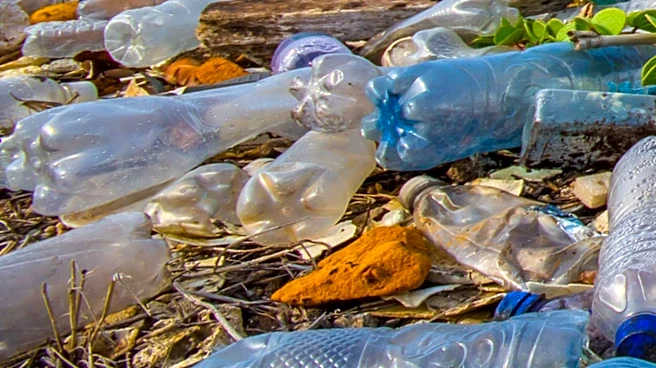
reduce greenhouse gas emissions associated with predominant U.S. PET beverage bottle systems by 2050. The roadmap projects a 57% reduction in the life cycle greenhouse gas emissions intensity of PET beverage bottle systems. This means a substantial decrease in emissions per bottle from material sourcing to disposal or recycling. Even with projected production growth, total annual emissions from the studied systems could fall by approximately 42%, equivalent to removing 323,000 gas-powered passenger vehicles from the road. The report builds on NAPCOR's previous assessment, which found PET soda bottles have a lower greenhouse gas footprint than aluminum cans and glass bottles. Key strategies for reduction include lightweighting, renewable energy adoption, and manufacturing efficiency improvements, with further gains expected from stronger collection systems, increased recycling, and infrastructure investment.
Why It's Important?
This roadmap is significant for the U.S. packaging industry and environmental policy, demonstrating a clear pathway for a major sector to reduce its carbon footprint. PET is the most recycled plastic globally, and these projected reductions highlight the potential for sustainable growth within the industry. The findings suggest that environmental performance can improve even as consumer demand for PET packaging increases, challenging the notion that economic growth and environmental protection are mutually exclusive. For manufacturers, the roadmap identifies actionable strategies, many of which are already available, such as improving bottle design and energy efficiency. For policymakers, it underscores the importance of supportive policies that enhance collection and recycling infrastructure, which are crucial for achieving deeper long-term emission reductions. This initiative could also strengthen American manufacturing by increasing the domestic supply of recycled PET, fostering supply chain resilience and creating economic opportunities within the recycling sector.
What's Next?
The roadmap indicates that substantial progress in emission reduction can occur well before 2050. For instance, the emissions intensity of a 16.9-ounce PET water bottle system could decline by approximately 44% by 2035 compared to 2023 levels, with carbonated soft drink bottles seeing reductions of 35% to 43% in the same period. The PET industry is expected to continue advancing bottle design, energy efficiency, and production processes. However, deeper long-term gains will depend on broader systemic changes, including reliable supplies of high-quality recycled PET, enhanced collection and sorting infrastructure, increased recycling capacity, and supportive government policies. Collaboration across the entire value chain, from manufacturers to recyclers and policymakers, will be essential to realize the full potential of these decarbonization efforts. Future investments in U.S. manufacturing and recycling capacity are anticipated to align with these decarbonization goals, further strengthening domestic supply chains.
Beyond the Headlines
The NAPCOR roadmap highlights a broader trend in U.S. industry towards integrating sustainability into core business models. It underscores the economic benefits of decarbonization, showing that investments in environmental improvements can also bolster domestic manufacturing and supply chain resilience. This approach could serve as a model for other industries facing similar pressures to reduce their environmental impact while meeting consumer demand. The emphasis on connecting manufacturing with the recycling system points to a shift towards a more circular economy, where materials are kept in use for longer, reducing reliance on virgin resources. Furthermore, the report implicitly addresses the ongoing debate about the environmental impact of different packaging materials, providing data that supports PET as a viable option with a clear path to further environmental improvement. This could influence consumer perceptions and corporate purchasing decisions, driving demand for more sustainably produced and recyclable packaging options.