




What's Happening?
New York City's luxury rental market is witnessing a significant influx of wealth and demand driven by the booming artificial intelligence industry. According to Realtor.com, the AI wealth boom, highlighted by Anthropic's recent IPO and substantial valuation,
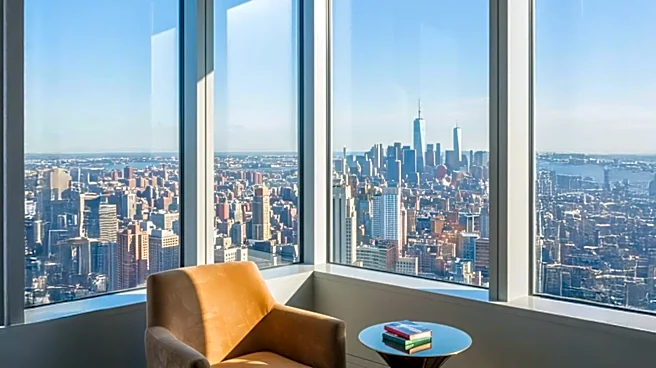
is creating a new class of affluent professionals seeking high-end housing in Manhattan. Evan Kleinberg, co-founder of Cornelia Street Partners, noted a rapid increase in AI leasing activity, with companies needing space immediately. Michelle Griffith, a New York City residential real estate agent, stated that AI is becoming a major engine for wealth creation and housing demand, contributing to an already tight rental market where rents for luxury properties have risen 10% to 20% over the last year. The median sold price of a home in Manhattan increased by 15% year-over-year to $1,150,000 as of November, with some neighborhoods like the Lower East Side seeing a 28% jump.
Why It's Important?
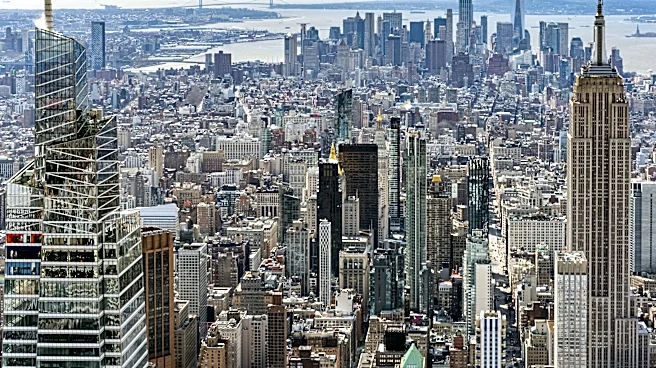
The surge in demand from AI professionals is profoundly impacting New York City's real estate landscape, particularly the luxury rental and sales markets. This trend is exacerbating an already limited housing supply, leading to increased competition and rising prices. The concentration of AI companies, including major players like Anthropic, Palantir, OpenAI, and EliseAI, in areas like Lower Manhattan, SoHo, Tribeca, and Hudson Square, is creating localized housing pressures. This shift means that traditional drivers of Manhattan's luxury real estate, such as Wall Street, are now being supplemented by the tech sector. The rapid growth of the AI industry and its associated wealth generation are reshaping urban demographics and economic patterns, making it more challenging for other high-income earners to secure housing in desirable areas. This dynamic could lead to broader discussions about housing affordability and urban development strategies in major U.S. cities.
What's Next?
The continued expansion of AI companies in New York City is expected to sustain the high demand and upward pressure on luxury real estate prices. Real estate agents are now facing the challenge of finding available luxury rentals for deep-pocketed tenants, rather than finding tenants for properties. This trend suggests that the market will remain highly competitive, with potential for further rent and sale price increases in prime locations. City planners and developers may need to consider strategies to address the growing housing demand, which could include new luxury developments or policies aimed at increasing housing supply. The long-term implications could also involve a shift in the city's economic identity, with technology playing an increasingly dominant role alongside finance.
Beyond the Headlines
Beyond the immediate economic impact, the AI boom's effect on New York's luxury real estate highlights broader societal implications. The rapid creation of wealth in the tech sector is contributing to widening economic disparities within the city, as housing becomes increasingly inaccessible to those outside this high-income bracket. This phenomenon could lead to cultural shifts, as neighborhoods become more dominated by a specific professional demographic. The ethical dimension of this rapid wealth accumulation and its impact on urban living spaces could become a point of public discourse, particularly concerning the balance between economic growth and social equity. The concentration of AI talent and companies in New York also solidifies the city's position as a global tech hub, potentially drawing more investment and innovation but also intensifying existing urban challenges.