









What's Happening?
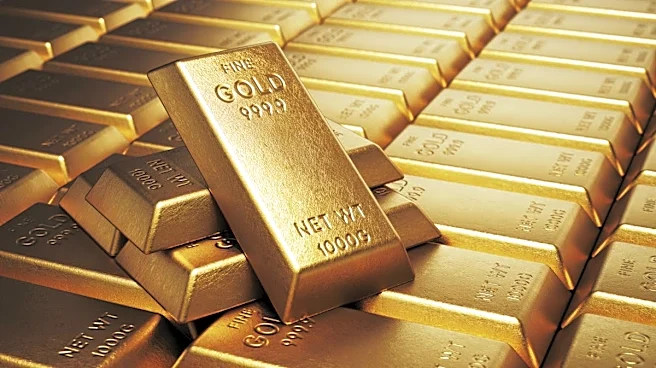
Heraeus Precious Metals has released an appraisal indicating that central bank demand for gold is expected to continue. Despite high gold prices, central banks have been net buyers of gold since 2010, with purchases reaching 863 tons last year. Gold has surpassed
US Treasuries as the most valuable reserve asset, accounting for 27% of official reserves. The World Gold Council's survey shows that 45% of central banks plan to increase their gold reserves in the next 12 months. The demand is driven by gold's role as a long-term store of value, inflation hedge, and crisis asset. The appraisal also highlights the strategic importance of gold reserves, especially in times of geopolitical tensions and economic uncertainty.
Why It's Important?
The sustained demand for gold by central banks underscores its critical role as a financial safeguard in uncertain economic times. As a non-counterparty asset, gold provides a level of security that other reserve assets, like foreign currencies and bonds, cannot offer. This trend reflects a strategic shift by central banks to diversify their reserves and mitigate risks associated with geopolitical tensions and economic volatility. The continued accumulation of gold reserves could influence global gold prices and impact the broader financial markets. For the U.S., this trend may affect the value of the dollar and U.S. Treasuries, as central banks adjust their reserve compositions.
What's Next?
Central banks are likely to continue their gold purchasing strategies, potentially leading to further increases in gold prices. This could prompt other financial institutions and investors to reassess their asset allocations. The geopolitical landscape and economic conditions will play a significant role in shaping central bank policies regarding gold reserves. Additionally, countries may consider repatriating their gold reserves to mitigate risks associated with holding them overseas. The ongoing demand for gold could also drive exploration and production activities in the mining sector, impacting global supply dynamics.