





What's Happening?
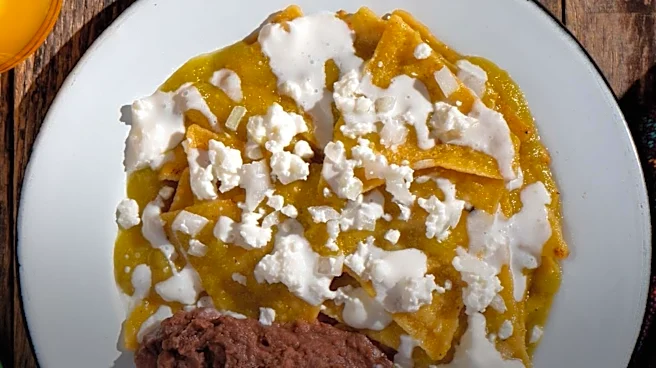
Taquearte, a restaurant located in a Pico Rivera strip mall, has gained recognition for serving the best chilaquiles in Los Angeles. Owners Monica Quinto and Anyelo Farfán have infused their Mexico City upbringing into the menu, offering dishes such as massive
tacos, chicharrón de queso, and family salsa recipes. The restaurant specializes in Mexico City-style chilaquiles, which are made with thin tortilla chips covered in a green sauce, crumbled cheese, crema, and topped with eggs and steak. The establishment has become a popular daytime destination, drawing lines of customers eager to try its offerings. Taquearte also serves a variety of non-alcoholic beverages, including Mexican Coke and aguas frescas.
Why It's Important?
Taquearte's success highlights the growing appreciation for authentic Mexican cuisine in Los Angeles, particularly dishes that reflect the diverse culinary traditions of Mexico City. By offering large tacos and unique chilaquiles, the restaurant provides a distinct alternative to the Tijuana-style tacos that dominate the local food scene. This culinary diversity enriches the cultural fabric of Los Angeles and supports the city's reputation as a hub for international cuisine. Additionally, Taquearte's popularity underscores the demand for authentic and high-quality Mexican food, which can drive further innovation and competition among local restaurants.
What's Next?
As Taquearte continues to attract attention for its chilaquiles and other offerings, it may inspire other restaurants to explore and introduce more regional Mexican dishes to the Los Angeles market. The restaurant's success could lead to expansion opportunities or collaborations with other culinary experts to further enhance its menu. Additionally, the growing interest in authentic Mexican cuisine may encourage food critics and culinary influencers to spotlight similar establishments, potentially increasing their visibility and customer base.
Beyond the Headlines
Taquearte's emphasis on Mexico City-style chilaquiles and large tacos reflects a broader trend of cultural preservation through food. By championing traditional recipes and cooking methods, the restaurant plays a role in maintaining and celebrating Mexican heritage within the U.S. This cultural exchange through cuisine fosters greater understanding and appreciation of Mexican traditions, contributing to a more inclusive and diverse society. Furthermore, the restaurant's success may encourage other immigrant communities to share their culinary heritage, enriching the American food landscape.