





What's Happening?
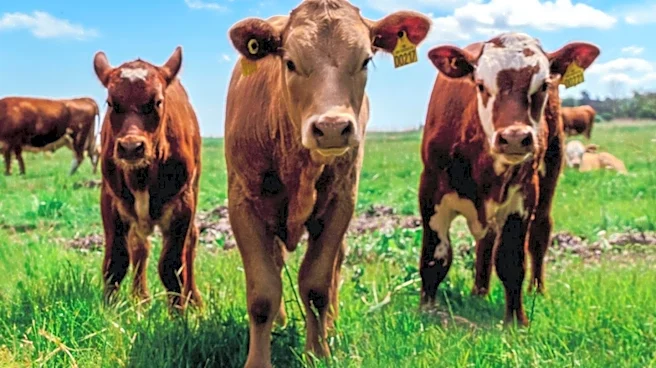
In the latest episode of 'Going Rogue with Lara Logan,' cattle rancher Shad Sullivan joined Lara Logan to discuss critical issues facing the U.S. beef market and independent producers. The conversation highlighted the significant concentration within
the U.S. beef processing industry, where four companies reportedly control approximately 85% of the market. Sullivan, a fifth-generation cattle rancher and Property Rights Committee Chair for R-CALF USA, argued that this concentration severely limits independent producers' leverage. The discussion also covered beef imports, the importance of country-of-origin labeling, and private property rights. The U.S. Department of Justice has acknowledged this market concentration and is currently investigating potential collusion, price fixing, and price manipulation within the industry. The episode also touched upon the USDA's current 'Product of USA' labeling rules, which require animals to be born, raised, slaughtered, and processed in the U.S. for the label to be used, with Sullivan advocating for stronger mandatory country-of-origin labeling for beef.
Why It's Important?
The issues raised by Shad Sullivan and Lara Logan are critical for the U.S. agricultural sector, particularly for independent cattle ranchers and consumers. The high concentration in the beef processing industry can lead to reduced competition, potentially allowing a few dominant companies to dictate prices for both cattle producers and consumers. This imbalance of power can squeeze the profits of independent ranchers, making it difficult for them to sustain their operations. Furthermore, the debate over country-of-origin labeling directly impacts consumer transparency and the ability of American consumers to make informed choices about where their beef comes from. Stronger labeling requirements could support domestic producers and ensure that consumers are not misled by products that may be processed in the U.S. but sourced from abroad. The ongoing federal investigation into potential anti-competitive practices underscores the significant economic and regulatory implications for the entire U.S. beef supply chain.
What's Next?
The federal investigation into potential collusion, price fixing, and price manipulation by the largest meatpackers is ongoing, and its outcome could lead to significant regulatory changes or enforcement actions within the U.S. beef industry. Ranchers and advocacy groups like R-CALF USA are expected to continue pushing for increased competition and transparency, including advocating for stronger mandatory country-of-origin labeling for beef. This legislative push could gain traction in Congress, potentially leading to new laws that would alter how beef products are labeled and marketed in the U.S. Additionally, the broader discussion around private property rights and land-use battles, as mentioned by Sullivan, suggests ongoing legal and political efforts to protect independent food production. The continued public discourse, as facilitated by programs like 'Going Rogue with Lara Logan,' will likely keep these issues in the national spotlight, influencing policy debates and consumer awareness.
Beyond the Headlines
Beyond the immediate economic and regulatory concerns, the discussion highlights deeper implications for the future of independent farming and food security in the U.S. The increasing consolidation in agricultural industries raises questions about the resilience of the food supply chain and the potential for a few large corporations to exert undue influence over essential resources. The emphasis on private property rights by Shad Sullivan also points to a broader philosophical debate about individual liberties versus corporate power in the context of land use and resource control. If independent ranchers continue to face economic pressures due to market concentration, it could lead to a decline in family-owned farms, impacting rural communities and potentially shifting the landscape of American agriculture towards larger, more industrialized operations. This trend could have long-term consequences for biodiversity, environmental sustainability, and the cultural heritage associated with traditional ranching practices.