









What's Happening?
The Jacksonville Jaguars are contemplating ending their long-standing tradition of playing an annual home game at Wembley Stadium in London. Jaguars president Mark Lamping stated that the team aims to host all of its 2028 home games in Jacksonville. This
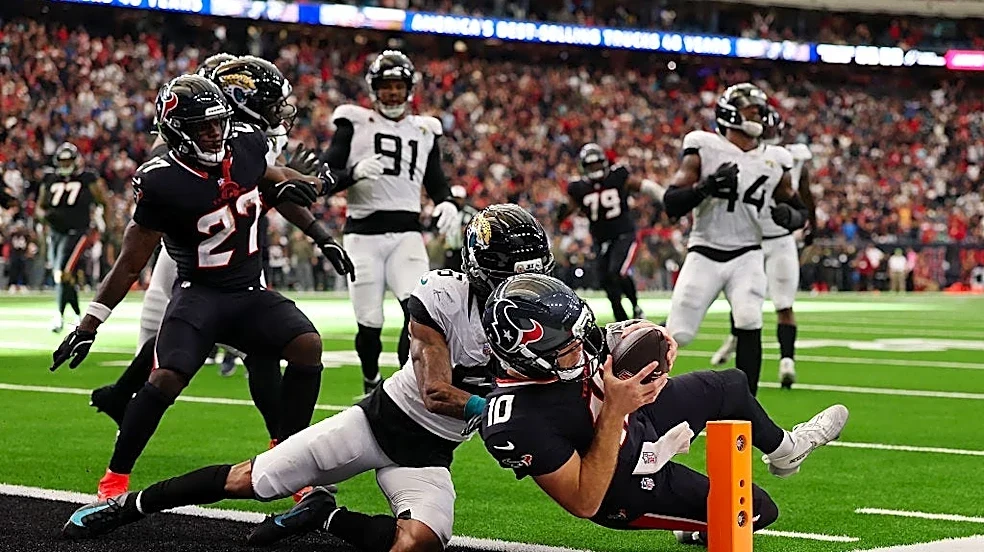
decision aligns with the anticipated re-opening of their stadium, which is undergoing a significant $1.4 billion renovation. The Jaguars have been early proponents of the NFL's international expansion, having staged an annual game at Wembley since 2013. However, the economic incentives for playing these games abroad have reportedly diminished over time. The team is scheduled to play its 16th London game against the Houston Texans. While the Jaguars are set to play one international game next season as part of NFL mandates, there is no guarantee it will be in London, despite Lamping's hope for it to be there. The team will also move most of its home games to Orlando next season due to ongoing construction at EverBank Stadium, which is currently operating at reduced capacity.
Why It's Important?
This potential shift in the Jacksonville Jaguars' home game strategy carries significant implications for both the team's financial model and the NFL's international outreach efforts. For the Jaguars, consolidating home games in Jacksonville, particularly with a newly renovated stadium, could boost local fan engagement, ticket sales, and concession revenues, maximizing the return on their substantial investment. It also signals a potential re-prioritization of their local market over international exposure. For the NFL, the Jaguars' decision could indicate a broader re-evaluation of the economic viability and strategic benefits of annual international home games for individual franchises. While the NFL continues its international push, a reduction in voluntary international games by a team that was an early adopter might suggest that the initial economic advantages are no longer as compelling. This could influence how other teams approach their international game commitments and potentially lead to a more selective approach to global expansion, focusing on mandated games rather than voluntary ones.
What's Next?
The Jacksonville Jaguars are expected to play one international game next season, though its location is not yet confirmed, with London being a possibility but not a certainty. The team will also temporarily relocate most of its home games to Orlando for the upcoming season as construction on EverBank Stadium progresses. The critical decision regarding the 2028 season's home game schedule, specifically whether all games will be played in Jacksonville, will likely be finalized closer to the stadium's re-opening. This decision will be influenced by the completion status of the $1.4 billion renovation and the team's assessment of maximizing local revenue and fan experience in their new facility. The NFL will also continue to determine the locations for its mandated international games, which could still include London for other franchises, irrespective of the Jaguars' long-term strategy.
Beyond the Headlines
The Jaguars' potential withdrawal from their annual Wembley game highlights a nuanced tension between global brand expansion and local market cultivation in professional sports. While international games offer significant exposure and new revenue streams, they can also dilute the home-field advantage and potentially strain the relationship with the local fan base. The $1.4 billion stadium renovation underscores a commitment to the Jacksonville community, suggesting a strategic pivot towards solidifying their roots and maximizing the fan experience at home. This move could set a precedent for other NFL teams considering similar long-term international commitments, prompting a re-evaluation of whether the benefits of playing abroad consistently outweigh the advantages of a fully localized home schedule, especially with significant investments in domestic infrastructure. It also raises questions about the long-term sustainability of annual international 'home' games for individual franchises versus the NFL's broader international series.