





What's Happening?
A trader on Polymarket placed a $13,550 bet on November 28, 2026, predicting Bitcoin will dip to $45,000 by December 31, 2026. This wager, made at 13% odds, could yield an $88,331 profit if successful. The bet follows a period of Bitcoin weakness in late
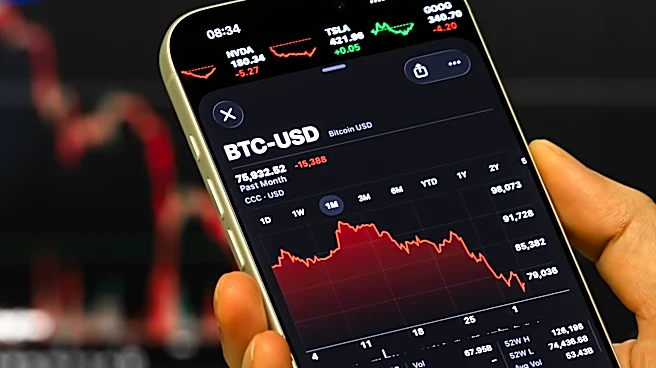
October, attributed to a reported security incident at Binance. AP News reported on October 29, 2026, that Binance was investigating a potential hack, which later escalated to hackers stealing over $6 billion in what was described as the largest crypto heist on record. Binance subsequently stated it had reserved over $6.34 billion to cover losses and was working to freeze approximately $3 billion in affected assets. Additionally, Bitcoin fell below $77,000 in late October amidst a broader market selloff driven by concerns that enthusiasm for artificial intelligence had inflated tech stock valuations. More recently, a key U.S. inflation gauge remained elevated ahead of the Federal Reserve’s December meeting, contributing to Wall Street's volatile period as investors weigh inflation and growth concerns.
Why It's Important?
This significant bet on Bitcoin's future price reflects ongoing market uncertainty and investor sentiment within the cryptocurrency space. The potential for a substantial payout highlights the high-risk, high-reward nature of prediction markets and cryptocurrency trading. The context of the bet—following a major crypto heist and broader market volatility—underscores the fragility of investor confidence in digital assets. A drop to $45,000 would represent a significant decline from its recent levels, potentially impacting retail and institutional investors holding Bitcoin. The incident at Binance, one of the largest cryptocurrency exchanges, raises questions about the security infrastructure within the crypto ecosystem and could lead to increased regulatory scrutiny. Furthermore, the broader economic concerns, such as elevated inflation and tech stock valuations, indicate that macroeconomic factors continue to influence the cryptocurrency market, making it susceptible to wider financial trends.
What's Next?
The resolution of this bet hinges on Bitcoin's price performance leading up to January 1, 2027. Market participants will closely monitor Bitcoin's price movements, especially in response to any further security incidents in the crypto space or significant macroeconomic data releases. The Federal Reserve's upcoming December meeting and subsequent policy decisions regarding inflation and interest rates will likely influence investor behavior across all asset classes, including cryptocurrencies. The ongoing efforts by Binance to recover stolen assets and enhance security measures will also be critical in restoring investor trust. Should Bitcoin approach the $45,000 mark, it could trigger further sell-offs as other traders might follow suit, anticipating a continued downward trend. Conversely, any positive developments in the crypto market or a stabilization of broader economic conditions could invalidate the bet, leading to losses for the trader.
Beyond the Headlines
This bet on Bitcoin's decline points to deeper anxieties within the digital asset market regarding security, regulation, and systemic risk. The $6 billion Binance hack, described as the largest crypto heist, exposes vulnerabilities that could undermine the mainstream adoption of cryptocurrencies. Such incidents not only result in direct financial losses but also erode trust, potentially leading to stricter regulatory frameworks aimed at protecting investors and preventing illicit activities. The interplay between traditional economic indicators, like inflation and tech stock performance, and cryptocurrency valuations suggests that Bitcoin is increasingly integrated into the broader financial system, making it less of an isolated asset. This integration means that crypto markets are no longer immune to global economic headwinds, challenging the narrative of Bitcoin as a completely uncorrelated asset. The outcome of this bet, regardless of its financial impact on a single trader, will serve as a barometer for market sentiment and the perceived stability of the cryptocurrency ecosystem.