







What's Happening?
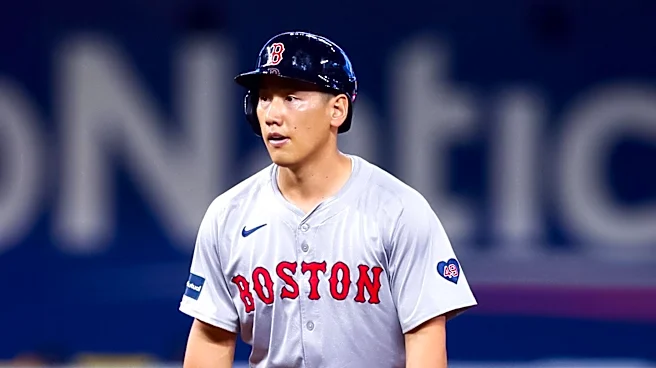
The Boston Red Sox are reportedly unlikely to retain Masataka Yoshida for the 2027 MLB season, according to Chris Cotillo of MassLive.com. Yoshida, who is currently owed $18 million for the 2027 season, had a respectable offensive performance in 2026,
batting .274/.347/.399 with five home runs and a 28:33 walk-to-strikeout ratio over 87 games. However, his defensive capabilities in the outfield are considered a significant liability, and the Red Sox already possess a surplus of outfield talent. The team may consider eating the remainder of his contract if a suitable trade partner cannot be found. This decision comes amidst a series of injury-related news for Yoshida in 2026, including stints on the injured list for a hamstring strain and battling illness.
Why It's Important?
This potential move by the Red Sox highlights the increasing emphasis on defensive versatility and overall roster balance in modern MLB. While Yoshida demonstrated offensive competence, his defensive shortcomings appear to outweigh his contributions at the plate, especially given his substantial salary. For the Red Sox, shedding Yoshida's contract, even if it means absorbing some of the cost, could free up significant payroll flexibility. This financial maneuver would allow the team to pursue other players who better fit their strategic needs, potentially addressing other areas of weakness or investing in players with stronger two-way capabilities. The decision also reflects a broader trend in baseball where teams are less willing to carry players who are primarily designated hitters or have significant defensive limitations, particularly when those players command high salaries.
What's Next?
The Red Sox will likely explore trade options for Masataka Yoshida in the coming months, though finding a team willing to take on his $18 million salary for 2027, given his defensive issues, could prove challenging. If no trade materializes, the team will face the decision of either keeping him on the roster despite his defensive limitations or releasing him and absorbing the remaining salary. This move would open up a roster spot and financial resources, which the Red Sox could then use to target free agents or make other trades to bolster their team for the 2027 season. The outcome will significantly impact the Red Sox's roster construction and financial strategy for the upcoming year.
Beyond the Headlines
The Red Sox's likely decision regarding Masataka Yoshida underscores a critical aspect of team management in professional sports: the balance between offensive production, defensive capability, and financial commitment. It illustrates how even players with solid offensive numbers can become expendable if they do not fit the team's overall strategic vision or if their weaknesses in other areas are too pronounced. This situation could also influence future contract negotiations for players who are primarily offensive specialists, potentially leading to more performance-based incentives or shorter-term deals. The willingness of a major market team like the Red Sox to potentially 'eat' a significant contract also signals a shift in how teams manage underperforming or ill-fitting assets, prioritizing future flexibility and strategic alignment over simply retaining a player due to past investment.