








What's Happening?
The global civil and commercial helicopters market is experiencing significant growth, with projections indicating it will reach $39.38 billion by 2030, growing at a Compound Annual Growth Rate (CAGR) of 6.0%. This expansion is fueled by increasing demand
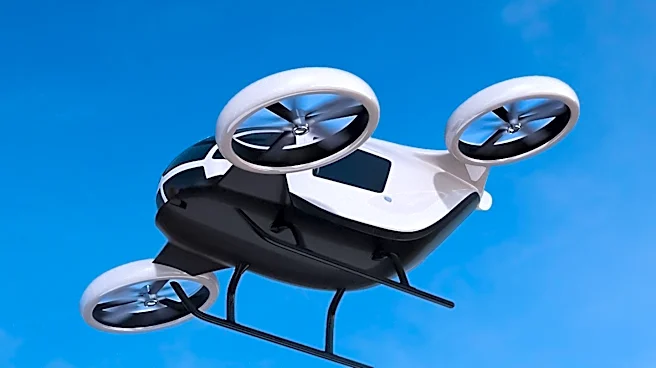
across various sectors, including emergency medical services, offshore energy operations, tourism, public safety, and infrastructure development. Key drivers for this growth include the development of urban air mobility services, wider deployment of helicopters in disaster response, increased support for offshore wind farms, and the use of rotorcraft in remote infrastructure projects. Companies like Bell Textron Inc., Airbus Helicopters SAS, Leonardo S.p.A., and Lockheed Martin Corporation are accelerating innovation, particularly in hybrid-electric flight technology, improved aerodynamics, autonomous flight capabilities, and sustainable materials to enhance efficiency and reduce environmental impact.
Why It's Important?
This market growth is important for the U.S. economy and its aerospace industry, as companies like Bell Textron Inc. are major players in this sector. The increasing demand for civil and commercial helicopters translates into job creation, technological advancements, and economic contributions through manufacturing, maintenance, and operational services. The focus on hybrid-electric propulsion and sustainable materials signifies a shift towards greener aviation, which could position U.S. companies at the forefront of environmentally responsible aerospace solutions. Furthermore, the expanded use of helicopters in critical areas like emergency medical services and disaster response directly benefits public safety and welfare, while their deployment in offshore wind farms supports the nation's renewable energy goals. This growth also indicates a robust market for specialized aviation services, impacting various industries from tourism to logistics.
What's Next?
Looking ahead, the civil and commercial helicopters market is expected to continue its trajectory of innovation and expansion. Manufacturers, including Bell Textron Inc., will likely intensify their investments in research and development to further advance hybrid-electric flight, autonomous systems, and more efficient aircraft designs. The development of urban air mobility services is anticipated to create new market segments and operational models for helicopters. Additionally, the increasing global focus on renewable energy and disaster preparedness will likely drive further demand for specialized rotorcraft. Companies will also focus on localized production partnerships and expanding their service networks to meet the growing international demand, ensuring sustained growth and technological evolution in the sector.
Beyond the Headlines
The projected growth in the civil and commercial helicopters market reflects a deeper societal reliance on advanced aerial mobility for both essential services and economic development. Beyond the immediate financial implications, this trend highlights the evolving role of aviation in addressing complex challenges, from rapid medical transport in remote areas to supporting critical infrastructure like offshore wind farms. The emphasis on hybrid-electric technology and sustainable practices also points to a broader industry-wide commitment to environmental stewardship, potentially influencing regulatory frameworks and consumer expectations for all forms of air travel. This evolution could lead to a redefinition of urban transportation and emergency response capabilities, making air travel more accessible, efficient, and environmentally friendly in the long term.