




What's Happening?
The National Retail Federation (NRF) forecasts that U.S. retail sales for November and December will grow by 4.2% over 2025, reaching $1.013 trillion, marking the fastest holiday sales growth since 2021. This season is characterized by two key trends:
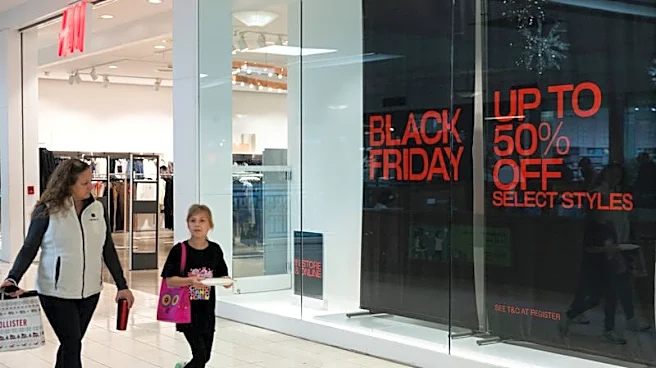
a return to in-store shopping and increased use of Artificial Intelligence (AI) for planning. While online channels remain popular, the 53% of consumers planning to buy online is the lowest share since 2015, driven by a desire for tactile experiences and in-person browsing. Concurrently, 4 in 10 shoppers plan to use generative AI for holiday shopping, primarily for finding deals, comparing options, and identifying retailers. AI is making store trips more intentional, with 21% of shoppers reporting this benefit, while only 4% plan to purchase gifts directly through AI tools.
Why It's Important?
This projected $1 trillion holiday season underscores the resilience of American consumer spending, which has driven nearly 80% of GDP growth over the past four quarters. The shift back to physical stores indicates a consumer preference for experiential retail, prompting retailers to invest in in-store experiences and promotions. The widespread adoption of AI by shoppers signifies a transformative change in consumer behavior, empowering them to make more informed and budget-conscious decisions amidst economic concerns like inflation and elevated debt. This trend highlights the competitive nature of the retail market, where businesses are leveraging technology to meet evolving customer demands. Policymakers are urged to maintain a supportive environment for innovation, as misguided antitrust efforts or a patchwork of state AI laws could hinder these consumer-benefiting tools.
What's Next?
Retailers are expected to continue integrating AI shopping assistants and enhancing in-store experiences to cater to evolving consumer preferences. The focus will likely remain on competitive pricing and value offerings as consumers prioritize bargain-hunting. The retail sector anticipates hiring between 325,000 and 375,000 seasonal workers to meet demand, indicating a robust job market in the short term. Policymakers will face ongoing discussions regarding AI regulation, with calls to avoid innovation-stifling legislation like the American Innovation and Choice Online Act (AICOA). The success of this holiday season will provide valuable insights into future retail strategies, emphasizing the blend of physical and digital shopping experiences and the growing role of AI in consumer decision-making.
Beyond the Headlines
The dual trends of returning to brick-and-mortar stores and leveraging AI for shopping planning reveal a deeper evolution in consumer culture. The desire for tactile experiences and festive atmospheres suggests a human need for physical interaction and sensory engagement that digital platforms cannot fully replicate. Simultaneously, AI's role as a 'holiday organizer' points to a future where technology augments, rather than replaces, traditional shopping behaviors, enabling greater efficiency and personalization. This integration could lead to new retail models that seamlessly blend online research with in-store purchasing. Furthermore, the debate around AI regulation highlights broader societal questions about technological governance, consumer protection, and fostering innovation without stifling competition, shaping the future landscape of commerce and technology policy.