




What's Happening?
Boeing's CEO, Kelly Ortberg, recently announced that the company's recovery plan is at least a year behind schedule. This delay comes as the aerospace and defense industry faces increasing competition from the burgeoning AI data center sector for critical
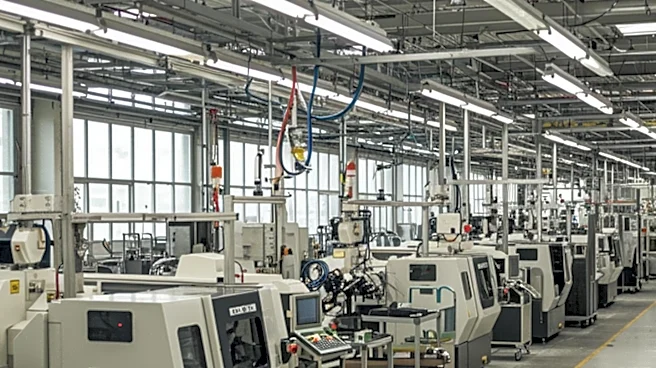
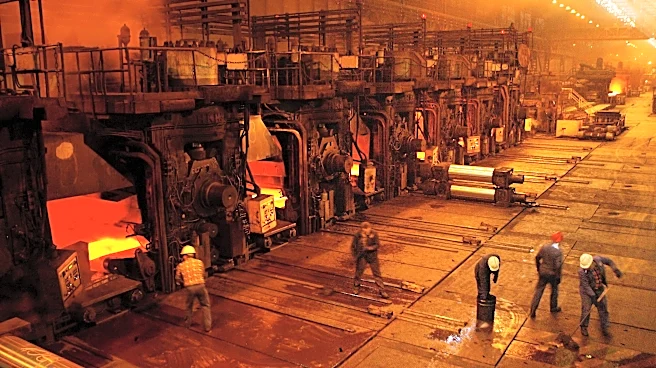
resources. The Financial Times reports that AI data centers are drawing from the same supply chains for workers, land, power, and components, leading to increased costs and resource scarcity. This competition impacts not only large manufacturers like Boeing but also their extensive network of suppliers, who are already grappling with inflation and skill shortages. The aerospace sector, despite its substantial revenue, often purchases parts in smaller volumes, limiting its purchasing power against the 'bottomless pit of money' attributed to tech companies.
Why It's Important?
The delay in Boeing's recovery plan has significant implications for the U.S. aerospace industry and its global standing. Boeing holds a record backlog of over 6,300 unfilled commercial aircraft orders, and prolonged delays could impact airline operations, consumer travel, and the company's financial performance. The broader issue of AI data centers competing for resources highlights a critical challenge for U.S. manufacturing and defense. Defense groups are also struggling to meet Pentagon demands for munitions, indicating a systemic strain on the supply chain. This competition could lead to higher production costs, slower innovation, and potentially compromise national security interests if defense contractors cannot secure necessary components and skilled labor. The situation underscores a growing tension between the rapid expansion of the tech sector and the foundational industries vital for economic stability and defense.
What's Next?
The aerospace and defense industry will likely need to strategize new approaches to secure its supply chain and workforce amidst the ongoing competition from AI data centers. This could involve advocating for government intervention, exploring new domestic and international sourcing options, or investing more heavily in workforce development programs. Boeing, in particular, will need to address its recovery plan delays to fulfill its substantial order backlog and maintain its market position. The situation may also prompt a reevaluation of industrial policies to ensure critical sectors are not undermined by the rapid growth of other industries. Suppliers, already facing inflation and skill shortages, may need to adapt their business models to remain competitive and reliable partners for aerospace and defense contractors.
Beyond the Headlines
This development points to a deeper structural shift in the U.S. economy, where the rapid growth of the digital economy, particularly AI, is creating unforeseen pressures on traditional manufacturing and defense sectors. The competition for resources, from skilled labor to electronic components and even land, highlights a potential reordering of economic priorities and power dynamics. It raises questions about the long-term sustainability of relying on single suppliers for thousands of parts and the need for greater resilience and diversification in supply chains. Ethically, it prompts a discussion on how to balance the growth of emerging technologies with the foundational needs of national security and critical infrastructure. The 'hyperscaling' phenomenon could lead to a re-evaluation of industrial policy, potentially favoring sectors deemed strategically vital over those with greater financial leverage.