





What's Happening?
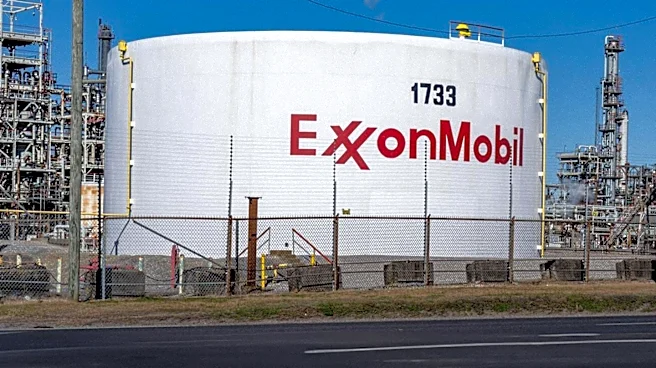
Darren Woods serves as the Chairman and Chief Executive Officer of ExxonMobil, a position he has held since 2017, following his appointment as President in 2016. Woods has dedicated nearly his entire professional career to ExxonMobil and its predecessor
operations, accumulating over three decades of experience in the global energy industry. His career trajectory within the company has included various domestic and international roles across ExxonMobil’s chemical, refining, supply, and corporate divisions. Under his leadership, ExxonMobil continues to manage its traditional energy operations while also venturing into lower-carbon technologies, as highlighted by the launch of the company's Low Carbon Solutions business. Woods earned a bachelor’s degree in electrical engineering from Texas A&M University and an MBA from Northwestern University’s Kellogg School of Management.
Why It's Important?
Darren Woods' leadership at ExxonMobil is crucial given the company's significant role as one of the world's largest energy corporations. His decisions directly influence global energy supply, commodity prices, and the broader economic landscape. As the energy industry navigates increasing demands for sustainability and lower-carbon solutions, Woods faces the complex challenge of balancing traditional fossil fuel operations with investments in new energy technologies. This strategic direction impacts not only ExxonMobil's financial performance and shareholder value but also global efforts to address climate change and transition to a more sustainable energy future. The company's actions under Woods' guidance can set precedents for other major energy players, affecting investment trends, technological innovation, and environmental policies worldwide.
What's Next?
Under Darren Woods' continued leadership, ExxonMobil is expected to further develop its Low Carbon Solutions business, indicating a strategic pivot towards integrating more sustainable practices within its vast operations. This involves ongoing investments in technologies aimed at reducing carbon emissions while simultaneously maintaining its core oil and gas production to meet current global energy demands. The company will likely face continued scrutiny from environmental groups and policymakers regarding its climate strategies and commitments. Woods' decisions will also be critical in navigating geopolitical complexities and fluctuating energy markets, which can impact the company's profitability and long-term growth. Future developments will likely include further announcements on carbon capture projects, biofuel initiatives, and other low-emission technologies, alongside traditional exploration and production activities.
Beyond the Headlines
Darren Woods' tenure at ExxonMobil highlights the broader ethical and economic dilemmas facing the global energy sector. The challenge of reconciling shareholder expectations for profitability with increasing societal pressure for environmental responsibility is a central theme. Woods' approach to leading a major oil and gas company into a future with lower carbon emissions reflects a significant shift in corporate strategy, moving beyond mere compliance to active participation in energy transition. This involves not only technological innovation but also navigating complex public perception and regulatory environments. The long-term success of ExxonMobil under Woods could serve as a case study for how established industries adapt to profound global changes, influencing corporate governance, investment ethics, and the future of energy policy.