





What's Happening?
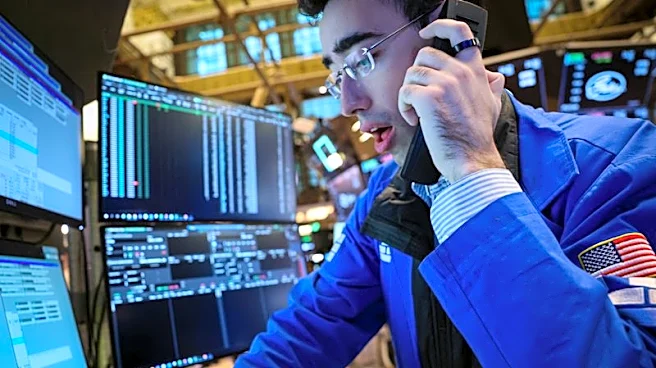
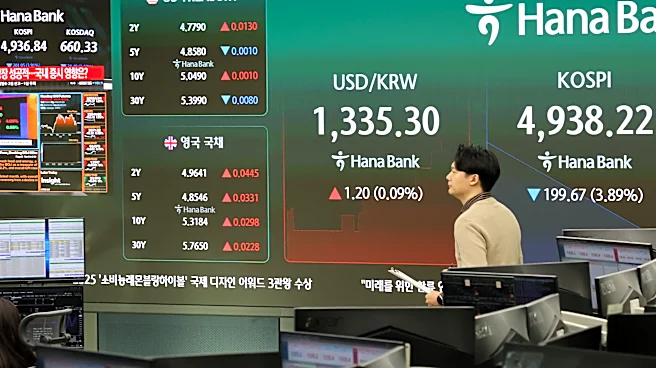
The U.S. stock market is experiencing an AI sell-off, leaving investors uncertain whether to 'buy the dip' or brace for further declines. Hopes that Anthropic's IPO would reverse the trend were dashed, as the Nasdaq has slipped into negative territory
for 2026, marking its worst week in over a year. This downturn follows a Democratic sweep in the midterm elections, growing anti-data-center sentiment, the resignation of Nvidia founder Jensen Huang, and concerns about the chip industry's ties to China. While Anthropic initially surged 34% above its IPO price, it nearly returned to its debut price of $83 per share. Investment professionals are divided, with some seeing a buying opportunity for long-term investors at 'compelling' prices, while others warn of a potential 'horrific downdraft' similar to market turmoil in the late 1990s.
Why It's Important?
This AI sell-off is a critical moment for the U.S. financial markets, particularly for the technology sector that has seen significant growth driven by AI enthusiasm. The debate among investors reflects broader uncertainties about the sustainability of AI valuations and the impact of political and economic factors on tech stocks. A prolonged downturn could affect retirement portfolios, institutional investments, and the overall economic outlook. The divergence in expert opinions highlights the inherent risks and opportunities in volatile markets, emphasizing the need for selective investing and a focus on fundamentals rather than blindly following trends. The situation also underscores the sensitivity of the tech sector to geopolitical tensions and domestic policy shifts, such as those related to data centers.
What's Next?
Investors are closely watching for further market signals, particularly as new legislators take office in January and companies prepare to provide earnings guidance for the coming quarter. Some analysts anticipate worse-than-expected guidance due to changing political winds, which could further depress the market. While some experts suggest dollar-cost averaging for long-term investors, others advise caution, noting that 'emotional investors can overwhelm opportunistic ones in the short term.' The market's trajectory will depend on how quickly investor confidence returns, the stability of the chip industry, and the impact of new policies on data center development. The current environment suggests a period of continued volatility and a need for strategic, rather than reactive, investment decisions.
Beyond the Headlines
The AI sell-off reveals deeper structural shifts in the market, including the increased influence of short-term trading and the rapid response of capital to perceived risks. The 'tight leashes' of money focused on short-term profits can amplify market swings, making it challenging for long-term investors to navigate. This situation also prompts a re-evaluation of how AI's potential is priced into company valuations, moving beyond speculative enthusiasm to a more grounded assessment of profitability and sustainable growth. The market's reaction to political events and industry leadership changes underscores the interconnectedness of technology, policy, and finance, suggesting that future investment strategies will need to account for a broader range of non-traditional market drivers.