







What's Happening?
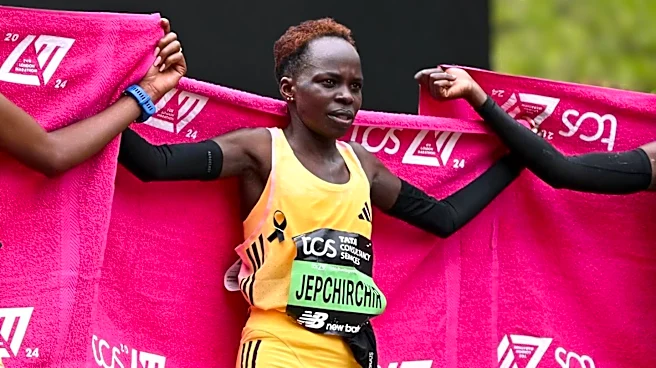
Peres Jepchirchir, the Olympic marathon champion, has been provisionally suspended in October 2026 following a positive doping test. The sample, collected before her victory at the Sydney Marathon, reportedly tested positive for EPO. This development
adds to a growing number of doping violations within Kenyan athletics, a situation that has drawn strong criticism from figures like 2016 Olympic silver medalist Julius Yego. Yego expressed his embarrassment and concern over the damage these cases are inflicting on Kenya's international reputation in athletics. The provisional suspension does not establish guilt, as her case remains pending, but it has already sparked significant reactions within the running community and raised further questions about the integrity of Kenyan athletes.
Why It's Important?
The provisional suspension of an Olympic champion like Peres Jepchirchir is a significant blow to the credibility of international athletics and specifically to Kenya's reputation, which has been under scrutiny due to a high number of doping cases. Doping undermines the fundamental principles of fair play and honest competition, eroding public trust in athletic achievements. For Kenya, a nation renowned for its long-distance runners, these repeated incidents threaten to tarnish its legacy and could lead to more severe sanctions from international sports bodies. The frustration voiced by clean athletes like Julius Yego highlights the internal struggle within the athletic community to uphold integrity against the actions of those who cheat. This situation emphasizes the ongoing global challenge of combating performance-enhancing drug use and ensuring a level playing field for all competitors.
What's Next?
Peres Jepchirchir's case will proceed through the anti-doping process, which typically involves further testing, hearings, and a final decision on her guilt and potential sanctions. If found guilty, she could face a lengthy ban from competition, forfeiture of titles, and significant damage to her career and reputation. This incident will likely intensify scrutiny on Kenyan athletics, potentially leading to increased testing, stricter oversight, and more robust anti-doping education programs within the country. International athletics organizations will continue to monitor the situation closely, and further actions, such as increased financial commitments to anti-doping efforts or even broader sanctions against national federations, could be considered if the problem persists. The outcome of Jepchirchir's case will be a critical moment for both her career and the ongoing fight against doping in sports.
Beyond the Headlines
The recurring doping scandals in Kenyan athletics, exemplified by Jepchirchir's provisional suspension, point to systemic issues that extend beyond individual athletes. These incidents raise questions about the pressures on athletes to perform, the availability of performance-enhancing drugs, and the effectiveness of national and international anti-doping frameworks. The emotional plea from Julius Yego underscores the profound impact of doping on the morale of clean athletes and the national pride associated with sporting success. This situation highlights the ethical dilemma faced by sports organizations: how to balance the pursuit of athletic excellence with the unwavering commitment to integrity. It also brings to light the socio-economic factors that might drive some athletes to resort to doping, particularly in regions where athletic success can offer a pathway out of poverty. Addressing these deeper issues requires a multi-faceted approach involving education, robust testing, and support systems for athletes.