


What's Happening?
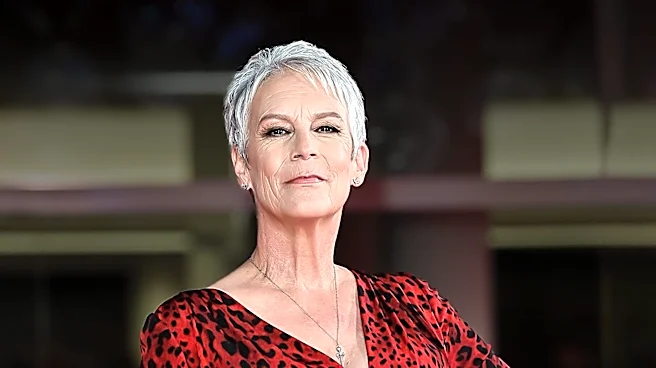
Jamie Lee Curtis reprised her role as Laurie Strode in 'Halloween II,' the 1981 sequel to John Carpenter's 1978 hit 'Halloween.' The film, made with a larger budget of $2.5 million, directly continues the narrative from the first movie, focusing on the immediate
aftermath of Michael Myers' reign of terror in Haddonfield, Illinois. The story picks up on the same Halloween night in 1978, detailing the hours after Dr. Loomis guns down Michael Myers and Michael's subsequent revival. Laurie Strode, the sole survivor of Michael Myers' initial attacks, remains central to the plot. A significant plot point introduced in 'Halloween II' is the revelation that Laurie Strode is Michael Myers' younger sister, which provides a motive for his relentless pursuit of her. The film also subtly introduces the Celtic holiday Samhain as a potential supernatural source for Michael's seemingly unkillable nature, a concept later expanded in subsequent films in the franchise.
Why It's Important?
The release of 'Halloween II' was significant for the horror genre as it demonstrated the commercial viability and narrative potential of direct sequels that pick up immediately after their predecessors. This approach allowed for a deeper exploration of existing characters and plotlines, rather than a complete reboot or a loosely connected follow-up. For Jamie Lee Curtis, her continued portrayal of Laurie Strode solidified her status as a prominent 'scream queen' and a resilient female protagonist in horror cinema, influencing future character archetypes in the genre. The film's introduction of a familial connection between Laurie and Michael Myers fundamentally altered the dynamic of their conflict, shifting it from random violence to a more personal and predestined struggle. This twist became a defining element of the 'Halloween' franchise for many years, shaping audience perception of Michael Myers' motivations and Laurie Strode's role as his primary target.
What's Next?
While 'Halloween II' largely functions as a standalone continuation of the original story, it laid groundwork for future installments in the franchise. The subtle hint at Samhain as a supernatural explanation for Michael Myers' resilience was further explored in 'Halloween IV' and 'Halloween V,' culminating in 'Halloween: The Curse of Michael Myers.' This thematic thread suggested a broader mythology for the killer, moving beyond simple psychopathy. Additionally, the introduction of Samhain in 'Halloween II' indirectly set the stage for 'Halloween III: Season of the Witch,' which notably departed from the Michael Myers storyline to explore a different horror narrative. The success of 'Halloween II' also ensured the continued production of sequels, establishing a long-running franchise that would see various reboots and continuations, with Jamie Lee Curtis returning to the role of Laurie Strode in later films, decades after the original.
Beyond the Headlines
The narrative choices made in 'Halloween II,' particularly the revelation of Laurie Strode as Michael Myers' sister, had a profound impact on the horror genre's approach to villain motivations and victim connections. This familial link transformed Michael Myers from an embodiment of pure evil into a more complex, albeit still terrifying, figure driven by a twisted sense of family. This trope of a personal connection between killer and victim became a recurring element in many subsequent horror films, influencing how antagonists were developed and how their obsessions were justified. Furthermore, the film's success in maintaining the tone and atmosphere of the original, despite a different director, demonstrated the importance of consistent thematic elements in building a successful horror franchise. It also highlighted the enduring appeal of Jamie Lee Curtis's portrayal of Laurie Strode as a symbol of resilience against seemingly insurmountable evil, cementing her legacy in cinematic history.