


What's Happening?
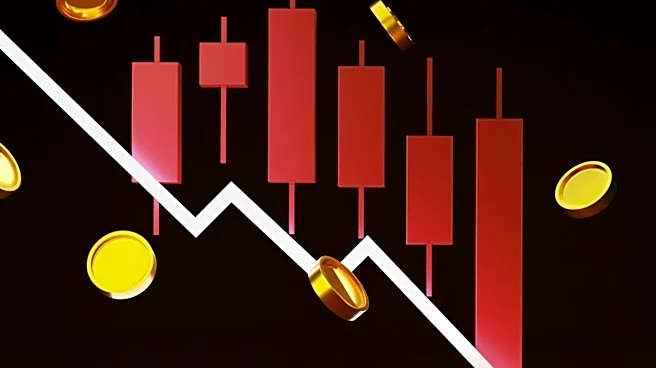
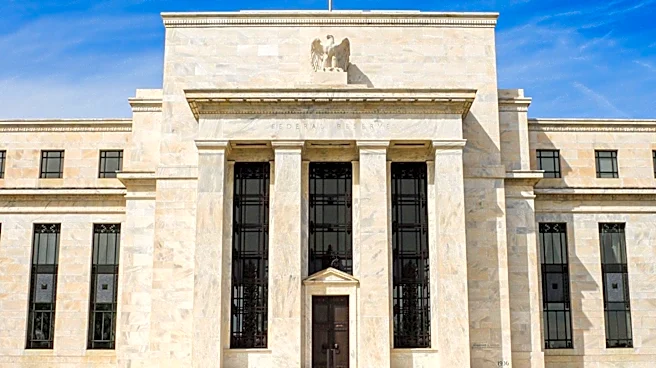
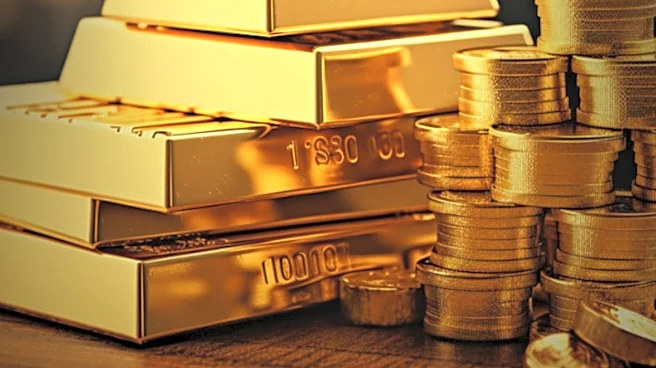
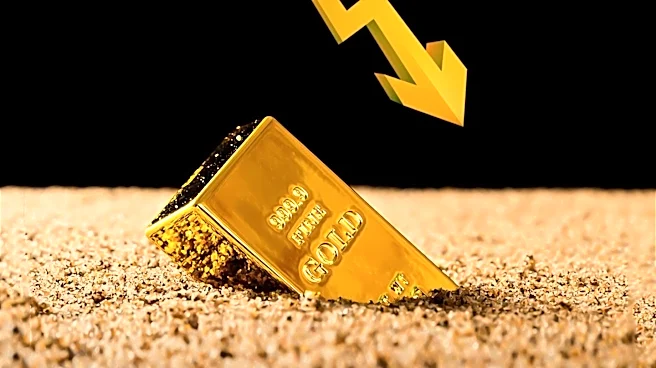
Gold prices rebounded on Monday, recovering from a more than one-year low, as investors scaled back their expectations for aggressive interest rate hikes by the US Federal Reserve. Spot gold climbed by as much as 2.6% to reach US$3,637 an ounce, following
a significant 9% decline last week, which marked its worst weekly performance since March. US gold futures also saw gains, rising nearly 3% to trade at similar levels. Analysts attribute this recovery primarily to bargain hunting by retail investors, particularly in markets like China, who perceived the sharp selloff as pushing prices into technically oversold territory. A temporary pause in the US dollar's recent rally also provided some relief for bullion, as a weaker dollar typically makes gold more affordable for international buyers.
Why It's Important?
The recovery in gold prices signals a potential shift in market sentiment regarding the US Federal Reserve's monetary policy. While markets still anticipate a 25-basis-point rate hike in December, expectations for larger increases have moderated. This moderation, coupled with a weaker US dollar, creates a more favorable environment for non-yielding assets like gold. The sharp selloff in gold had been driven by higher energy costs fueling inflation and subsequent central bank tightening. However, the recent easing of US Treasury yields, as investors sought safer assets amid an equity market downturn, has provided some support for gold. The actions of retail investors, particularly in Asian markets, highlight their influence in price stabilization during periods of volatility.
What's Next?
Market attention will now turn to the release of the October Personal Consumption Expenditures (PCE) price index, which is the Federal Reserve's preferred inflation gauge, scheduled for Wednesday. This data will be crucial in shaping further expectations regarding the Fed's monetary policy trajectory. Continued moderation in inflation figures could further support gold prices, as it might reduce the likelihood of more aggressive rate hikes. Conversely, stronger-than-expected inflation could renew pressure on gold. US Treasury Secretary Scott Bessent's recent warning about the risks of overly aggressive monetary tightening also adds to the uncertainty, suggesting that the Fed might adopt a more cautious approach. The longer-term diversification case for gold remains intact, though near-term volatility is expected to persist.
Beyond the Headlines
The recent volatility in gold prices reflects the broader economic anxieties and the delicate balance central banks face in managing inflation without stifling economic growth. The interplay between inflation, interest rates, and currency strength creates a complex environment for investors. Gold's role as a safe-haven asset becomes more pronounced during periods of economic uncertainty, even as it faces headwinds from rising interest rates. The behavior of retail investors, stepping in as 'dip buyers,' underscores a belief in gold's intrinsic value and its potential as a hedge against long-term economic instability. This dynamic suggests that while institutional investors may react to immediate policy shifts, a segment of the market views gold as a fundamental store of value, influencing its price floor during downturns.