





What's Happening?
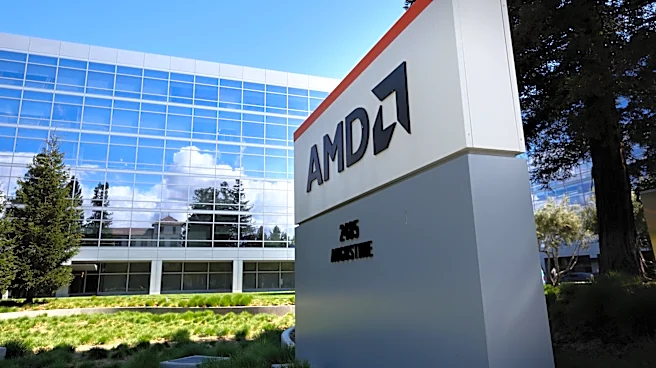
During the third quarter, hedge funds largely reduced their exposure to Advanced Micro Devices (AMD), despite the semiconductor company's stock outperforming the broader market. According to the latest 13F filings, two out of six hedge funds entirely
exited their AMD positions, two reduced their holdings, one increased its stake, and one maintained its position. Notably, Duquesne Family Office, led by Stanley Druckenmiller, sold its entire 73,000 AMD share position, and Appaloosa Management, led by David Tepper, also exited its entire 198,000-share stake. Other significant reductions included Soros Capital, which cut its AMD holdings by approximately 98.5%, and Discovery Capital, which reduced its position by 62.5%. In contrast, Glenview Capital was the only fund among those that traded AMD to increase its stake, raising its holdings by about 31.2%. Tiger Global Management kept its 675,000-share AMD position unchanged, making it the largest disclosed AMD shareholder among the six funds examined. AMD shares gained 13.10% during the third quarter, while the S&P 500 advanced by 2.25%.
Why It's Important?
The widespread reduction in AMD holdings by several prominent hedge funds, despite the stock's strong performance in Q3, highlights a divergence in investment strategies within the semiconductor sector. This trend suggests that some major institutional investors may be re-evaluating their exposure to certain chipmakers, potentially in favor of other AI-related semiconductor companies or different investment opportunities. The exits by funds like Duquesne Family Office and Appaloosa Management, known for their concentrated portfolios, could signal a cautious outlook on AMD's future growth trajectory or a strategic reallocation of capital towards perceived higher-growth areas. This collective selling pressure from influential hedge funds could impact investor sentiment towards AMD, potentially leading to increased scrutiny of its valuation and future prospects. For the broader market, it underscores the dynamic nature of investment decisions in the fast-evolving technology landscape, where even outperforming stocks can see significant institutional divestment.
What's Next?
The differing positions among hedge funds regarding AMD exposure suggest a period of re-evaluation within the semiconductor industry. While some funds are reducing or exiting their stakes, others are increasing or maintaining them, indicating varied perspectives on AMD's long-term potential. Investors will likely monitor AMD's performance in the coming quarters, particularly its ability to capitalize on the growing demand for AI-related chips, to understand if the hedge funds' divestment was a premature move or a prescient one. The 13F filings reflect holdings as of September 30, and subsequent adjustments by these managers, especially during any technology market fluctuations, will be crucial. The market's reaction to these institutional shifts could influence retail investor behavior and the overall valuation of semiconductor stocks, particularly those perceived to be in direct competition or complementary to AMD's offerings.
Beyond the Headlines
The contrasting hedge fund activity around AMD, where some are selling despite strong stock performance while others hold or buy, points to a deeper narrative about the complexities of investing in the rapidly evolving AI and semiconductor space. This divergence could be attributed to various factors, including differing analyses of competitive landscapes, future technological shifts, or individual fund mandates and risk appetites. It also highlights the 'what' versus 'why' challenge of 13F filings, where the public sees the trades but not the underlying strategic reasoning. This situation could lead to increased market volatility for AMD as investors try to decipher the long-term implications of these institutional moves. Furthermore, it underscores the ongoing debate about which semiconductor companies are best positioned to benefit from the AI boom, suggesting that the market is still in the process of identifying the definitive winners and losers in this transformative technological era.