






What's Happening?
Mohammod Khourshed Alam, the new CEO of RAK Ceramics (Bangladesh), is advocating for a strategic shift within the Bangladeshi ceramics industry, moving away from a volume-centric approach to one focused on creating greater value. In an interview with The
Business Standard, Alam outlined his priorities, which include achieving profitable growth, enhancing operational efficiency, and strengthening the company's market position. He noted that the market is currently grappling with increased input costs, energy constraints, financial pressures, evolving consumer behavior, and intense competition. Alam emphasized the need to improve manufacturing, supply chain, distribution, and working-capital efficiency, alongside developing products that cater to changing customer needs. He aims to see improvements in sales, market share, profitability, productivity, and customer satisfaction within the next one to two years. The CEO also highlighted the critical impact of energy availability and pressure on kiln operations, production planning, capacity utilization, product quality, and costs, given the energy-intensive nature of ceramic manufacturing.
Why It's Important?
This strategic shift proposed by RAK Ceramics' CEO is important for the long-term sustainability and competitiveness of the ceramics industry in Bangladesh. By prioritizing value over sheer volume, companies can potentially mitigate the impact of rising operational costs and market saturation, leading to more resilient business models. The focus on design, innovation, and quality standards, benchmarked against leading products, could elevate the industry's global standing and appeal to a more discerning consumer base. Furthermore, addressing operational efficiencies, particularly in energy consumption, is crucial for both cost reduction and environmental sustainability in an energy-intensive sector. The emphasis on strengthening local design capabilities and improving speed-to-market suggests a move towards greater self-reliance and responsiveness to local market demands, which can foster domestic talent and reduce dependence on external design trends. This approach could also influence other manufacturing sectors in Bangladesh to adopt similar value-driven strategies, contributing to broader economic development and diversification.
What's Next?
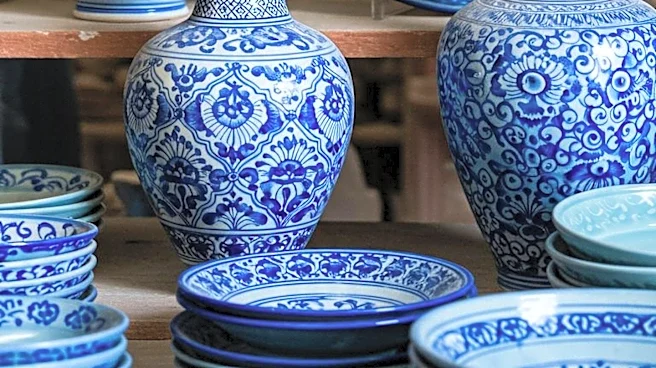
RAK Ceramics (Bangladesh) plans to evaluate new products, designs, and value-added segments, focusing on areas with sustainable demand and clear financial returns. The company will leverage RAK's global portfolio, which includes ceramic and gres porcelain tiles, sanitaryware, faucets, and tableware, to inform its product development in Bangladesh. A key next step involves connecting global technological and design capabilities with local market intelligence to understand the requirements of consumers, architects, and developers, and translate these insights into products more rapidly. The company will also continue to focus on strengthening local design capabilities, improving speed-to-market, introducing contemporary designs, and benchmarking technical and quality standards. In the short term, better production planning, energy monitoring, and kiln optimization will be implemented to address energy challenges, while longer-term plans include investments in energy-efficient technology, process optimization, alternative energy sources, and waste reduction.
Beyond the Headlines
The shift from volume to value in the ceramics industry reflects a broader economic trend where consumer behavior is evolving from being primarily price-driven to value-driven, with increasing consciousness about design, quality, functionality, after-sales service, and brand reputation. This change necessitates a fundamental re-evaluation of business strategies, moving beyond mass production to focus on niche markets, premium products, and enhanced customer experience. For Bangladesh, this evolution in the building materials sector, driven by urbanization, an expanding middle class, and demand for housing and commercial space, presents an opportunity for industrial transformation. Companies that invest in technology, design, energy efficiency, distribution, and human capital will be better positioned to thrive as the industry becomes more organized and quality-driven. This strategic pivot could also foster a culture of innovation and design excellence within the country's manufacturing landscape, potentially inspiring other sectors to adopt similar approaches for sustainable growth and global competitiveness.