





What's Happening?
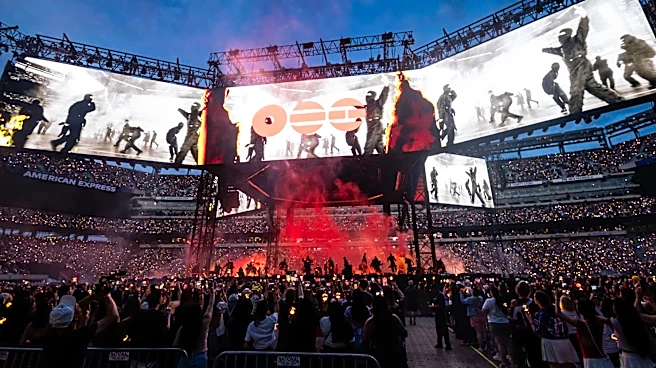
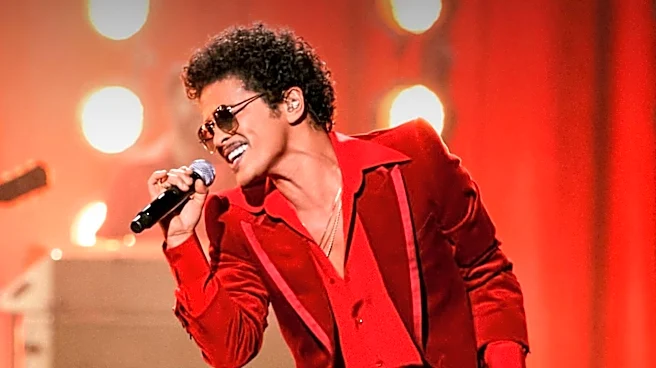
Bruno Mars's recent 'The Romantic Tour' at Wembley Stadium in London introduced a new ticket category: 'No View / Audio Only.' These tickets, priced at approximately £58 (around $80), allowed attendees to be inside the stadium but without any view of
the stage or giant screens. This offering contrasts with standard ticket prices, which ranged from £71.70 to £588.60. The practice has sparked debate about the commodification of the live music experience, with critics arguing it fragments the concert into portions based on affordability. Live Nation–Ticketmaster, which managed the sales, sold out all six nights of Mars's tour, indicating a high demand that allows for the monetization of even obstructed or non-viewing spots.
Why It's Important?
The introduction of 'audio-only' tickets by Live Nation–Ticketmaster for a major artist like Bruno Mars signifies a significant shift in the live music industry's pricing and access strategies. This move reflects a broader trend of 'damaged goods' economics, where companies create deliberately degraded versions of a product to cater to different price points without alienating full-price customers. While it makes concerts more accessible to those with limited budgets, it also raises concerns about the devaluation of the full concert experience and potentially exploits fans' desire for proximity to their idols. This strategy could become more prevalent, impacting how live events are structured and priced, and potentially leading to a tiered system where the 'experience' is increasingly segmented and monetized.
What's Next?
The 'audio-only' ticket model, if successful, could be adopted by more artists and venues, further segmenting the live music experience. This could lead to a future where concert attendance is less about seeing the performance and more about being present in the same physical space as the artist and fellow fans. Stakeholders, including artists, promoters, and fan groups, will likely continue to debate the ethics and implications of such ticketing practices. The industry may explore other innovative ways to monetize demand, potentially leading to new forms of 'damaged goods' or tiered access for live events. The long-term impact on fan engagement and the perceived value of a concert ticket remains to be seen.
Beyond the Headlines
The 'audio-only' ticket phenomenon highlights a deeper societal trend: the monetization of 'presence' and 'belonging' in an increasingly digital and commodified world. In an era where music can be streamed instantly, the unique value of a live concert often lies in the shared communal experience and the feeling of being part of something larger. These tickets tap into the desire to 'be there,' even without a visual component, reflecting a shift in what constitutes value for consumers. This raises ethical questions about whether the industry is extracting maximum profit from fan devotion or genuinely meeting a demand for more affordable access. It also underscores the power of collective experience, where the presence of other fans singing in unison becomes a significant part of the event's appeal, even when the artist is not fully visible.