










What's Happening?
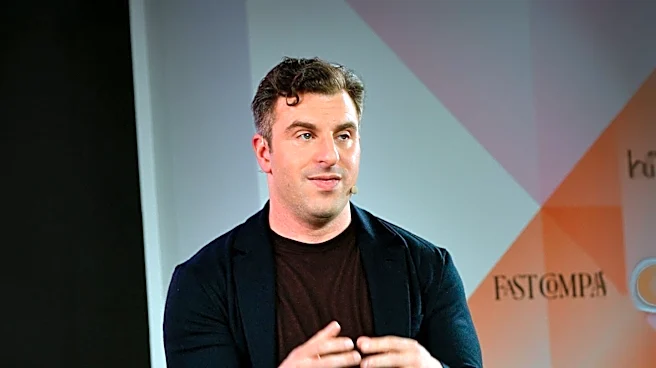
Airbnb CEO Brian Chesky announced that the company will dedicate $500 million to its nonprofit arm, Airbnb.org, over the next five years. This significant financial commitment aims to expand temporary housing support for individuals in crisis, including
medical travelers and disaster survivors. The funding mechanism involves Airbnb donating 10 cents from every eligible booking, with the company covering any shortfalls to meet the $500 million target. Airbnb.org, which already has its operating costs covered by the parent company, plans to scale its operations to provide 1 million nights of free housing annually. This initiative builds on Airbnb.org's history, which began in 2012 when an Airbnb host offered her home to those displaced by Hurricane Sandy, eventually leading to the formal establishment of the nonprofit in 2020. Since its inception, Airbnb.org has provided over 1.6 million nights of free housing to more than 250,000 people globally. The new funding model is designed to be automatic, with no additional cost to guests or reduced payouts for hosts, integrating social impact directly into Airbnb's core business operations.
Why It's Important?
This substantial pledge by Airbnb is significant for several reasons. Firstly, it provides a stable and substantial funding stream for Airbnb.org, enabling it to significantly expand its reach and impact in providing critical temporary housing during emergencies and personal crises. Housing is often the most immediate need for individuals displaced by disasters, seeking medical treatment far from home, or fleeing unsafe situations. By aiming for 1 million free housing nights annually, Airbnb.org can offer stability and support to a much larger population in need. Secondly, the funding model, which automatically allocates a portion of every booking, integrates corporate social responsibility directly into the company's business model, potentially setting a new standard for how large corporations contribute to social causes. This approach ensures consistent funding without relying solely on one-time donations or emergency fundraising. Lastly, the initiative addresses a critical gap in humanitarian aid by providing flexible, immediate housing solutions, which can be more adaptable to individual needs than traditional shelters, offering privacy, access to amenities, and proximity to essential services like medical care or schools.
What's Next?
In the coming years, Airbnb.org plans to expand its programs beyond disaster response to include support for families traveling for medical care in over 20 countries by the end of 2026. This expansion will involve partnerships with organizations such as the Leukaemia Foundation of Australia, Children’s Miracle Network in the United States, and Instituto Beaba in Brazil. Additionally, Airbnb.org will launch a new program to provide free temporary stays for survivors of domestic violence and exploitation, collaborating with partners like Peace House in Utah. In the U.S., the nonprofit will also enhance its support for veterans undergoing serious medical treatment, partnering with organizations such as Fisher House Foundation and Operation Healing Forces. The success of these expansions will depend on booking volumes, effective program implementation, and the ability of Airbnb.org to forge strong partnerships and scale its support across diverse regions and crisis scenarios. The company anticipates that this long-term commitment will institutionalize a continuous funding stream for temporary housing, addressing growing global needs.
Beyond the Headlines
This initiative by Airbnb raises broader discussions about the role of for-profit companies in addressing societal challenges, particularly in sectors where their core business might also face criticism. While Airbnb's commitment to crisis housing is a positive step, it also brings to light ongoing debates about the impact of short-term rentals on housing affordability and supply in various cities. Critics argue that platforms like Airbnb can exacerbate housing crises by reducing the availability of long-term residential units. CEO Brian Chesky has denied that Airbnb is a primary contributor to expensive cities but acknowledges that some hosts do take housing off the market. This philanthropic effort, therefore, could be viewed through multiple lenses: as a genuine act of corporate responsibility, as a strategic move to enhance corporate image amidst regulatory scrutiny, or as a way to legitimize the presence of short-term rentals. The long-term implications could include increased pressure on other large corporations to integrate similar social impact models into their operations, fostering a new era of corporate philanthropy that is intrinsically linked to business activity rather than being a separate charitable endeavor.