




What's Happening?
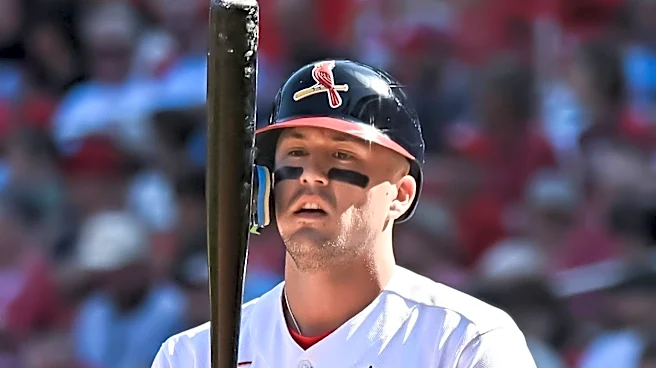
The St. Louis Cardinals have opted not to tender a contract to infielder Nolan Gorman, effectively ending his tenure with the team. Drafted 19th overall in 2018, Gorman was envisioned as a key left-handed power bat. While he showed promise in 2023, hitting
27 home runs and driving in 76 runs with a .236 average, his performance significantly declined in subsequent seasons. His primary issue was an inability to consistently make contact, evidenced by a career strikeout rate of 33.8% across 1,883 at-bats. This rate remained high even in his breakout 2023 season at 31.9% and spiked to 37.6% in 2024, staying above 32% through 2025 and 2026. Furthermore, his Isolated Power (ISO), a measure of extra-base hit power, dropped from .241 in 2023 to .124 by 2026. Despite still hitting the ball hard, his high launch angle and declining bat-to-ball skills led to harmless pop-ups, and his batting average never exceeded .205 between 2024 and 2026, even resulting in a minor league option in 2026.
Why It's Important?
Nolan Gorman's release highlights the high-stakes nature of player development and roster management in professional baseball. For the St. Louis Cardinals, this decision signifies a strategic shift in their infield core, moving away from a player who, despite initial promise, could not consistently deliver. This move frees up a roster spot and potentially salary, allowing the team to pursue other options or promote younger talent like Blaze Jordan and JJ Wetherholt, who have shown strong performances in the minors. For Gorman, this represents a critical juncture in his career. While his power potential remains attractive to other teams, his consistent contact issues and declining offensive production make him a high-risk, high-reward free-agent signing. His situation serves as a cautionary tale for prospects with significant power but unrefined plate discipline, underscoring the importance of a balanced offensive skill set in the MLB.
What's Next?
Nolan Gorman is expected to enter free agency, where a team will likely take a chance on his power potential. He is anticipated to be a low-cost, left-handed power option, offering a low-risk signing with the possibility of a significant reward if his career can be revitalized. For Gorman, this presents an opportunity to reignite his career with a new organization that might be able to address his contact inconsistencies and mechanical issues. The Cardinals, having cut ties, will continue to reshape their infield. The strong performances of minor league prospects Blaze Jordan and JJ Wetherholt suggest that the team is looking to internal options to fill the void, potentially signaling a youth movement in their infield. The market for Gorman will reveal how other teams value his raw power against his significant strikeout rates and declining overall offensive production.
Beyond the Headlines
Gorman's career trajectory reflects a broader trend in modern baseball where power hitters with high strikeout rates are increasingly common, but only those who can maintain a high Isolated Power (ISO) tend to thrive. His case illustrates the fine line between a successful slugger and a player whose offensive floor collapses due to contact issues. The Cardinals' decision also underscores the pressure on organizations to make tough choices when prospects don't meet expectations, especially when other options emerge. Ethically, the decision to release a player like Gorman, who was once a highly touted prospect, highlights the business side of sports, where potential often gives way to performance. Culturally, it reinforces the narrative of 'unrefined power' and the constant search for players who can combine strength with consistency, a challenge many young hitters face in the demanding environment of Major League Baseball.