







What's Happening?
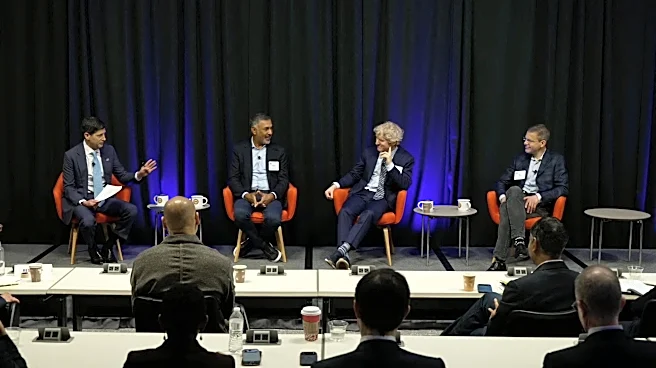
The United States Council for International Business (USCIB) recently hosted a high-level breakfast discussion with Stefano Scarpetta, Chief Economist at the OECD, and his economic survey team. This meeting was part of the finalization process for the OECD’s
2026 Economic Survey of the United States. USCIB board members and staff participated, alongside Susan Fridy, Head of the OECD Washington Centre. The discussions focused on the opportunities and challenges associated with the broader adoption of Artificial Intelligence (AI) across the U.S. economy. Key topics included policies necessary to promote AI use, the impact of AI on training and the workforce, and wider U.S. business priorities concerning trade, investment, and financial services. USCIB emphasized its role in representing the voice of U.S. business in global economic conversations, particularly regarding the interconnectedness of AI, trade, investment, and workforce competitiveness.
Why It's Important?
This engagement is significant as it directly influences the OECD’s 2026 Economic Survey of the United States, a crucial document that provides an independent assessment of the U.S. economy and offers policy recommendations. The focus on AI highlights its growing importance as a transformative technology with profound implications for economic growth, productivity, and labor markets. The USCIB's input ensures that the perspectives and priorities of U.S. businesses, particularly regarding AI adoption and its societal impacts, are considered in this international economic assessment. The survey's findings and recommendations can guide U.S. policymakers in developing strategies to harness AI's benefits while mitigating potential challenges, such as workforce displacement and the need for new skills. Furthermore, the discussion on trade, investment, and financial services underscores the ongoing global economic interconnectedness and the need for coherent international policies.
What's Next?
The OECD team is in the final stages of preparing its 2026 Economic Survey of the United States. The insights gathered from the USCIB discussion will likely be incorporated into this publication. Following its release, the survey's findings and recommendations will be presented to U.S. government officials and stakeholders, potentially influencing future economic policies related to AI, workforce development, trade, and investment. Businesses and policymakers will likely analyze the survey to identify areas for improvement and opportunities for growth. The ongoing dialogue between organizations like USCIB and international bodies such as the OECD is expected to continue, fostering collaboration on global economic challenges and opportunities, particularly as AI technologies evolve and integrate further into the economy.
Beyond the Headlines
The emphasis on AI in this discussion points to a broader societal shift and the increasing recognition of AI as a critical driver of future economic competitiveness. Beyond the immediate economic implications, the integration of AI raises ethical considerations regarding data privacy, algorithmic bias, and the future of work. The need for policies to promote AI use while addressing its impact on training and the workforce suggests a proactive approach to managing technological disruption. This engagement also highlights the role of international organizations like the OECD in fostering global dialogue and shaping policy frameworks for emerging technologies. The collaboration between U.S. business representatives and the OECD underscores the complex interplay between national economic interests and global economic governance in an era of rapid technological advancement.