






What's Happening?
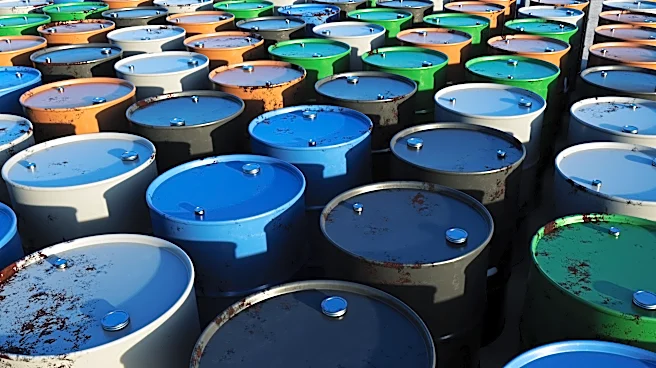
Fuel prices in the United States are experiencing an increase as a direct consequence of the escalating conflict in the Middle East. The ongoing geopolitical tensions and military actions in the region have a significant impact on global oil markets,
leading to higher crude oil prices. This surge in international oil prices is then reflected at the pumps across the U.S., affecting consumers and businesses alike. NBC News correspondent Keir Simmons reported on this development, highlighting the immediate connection between the instability in the Middle East and domestic fuel costs. The situation underscores the vulnerability of the U.S. economy to international events, particularly those impacting critical resources like oil.
Why It's Important?
The rise in fuel prices has broad implications for the U.S. economy and its citizens. For consumers, higher gas prices translate to increased costs for transportation, impacting daily commutes, travel, and the overall household budget. This can lead to reduced discretionary spending and a strain on personal finances. Businesses, especially those reliant on transportation and logistics, face higher operating costs, which may be passed on to consumers through increased prices for goods and services, potentially contributing to inflation. Industries such as trucking, airlines, and agriculture are particularly vulnerable to fuel price fluctuations. The situation also highlights the ongoing debate about energy independence and the need for diversified energy sources to mitigate the impact of global oil market volatility on the U.S. economy.
What's Next?
The trajectory of U.S. fuel prices will largely depend on the developments in the Middle East conflict. Any further escalation or de-escalation of hostilities will likely have a corresponding effect on global oil supply and demand, and consequently, on prices at the pump. Policymakers in the U.S. may consider various options to address the rising costs, such as releasing oil from strategic reserves, though such measures often have limited and temporary effects. Consumers might see continued price volatility, and businesses may need to adjust their pricing strategies or operational efficiencies to absorb the increased costs. The situation could also reignite discussions about long-term energy policies, including investments in renewable energy and domestic oil production, to reduce reliance on volatile international markets.
Beyond the Headlines
Beyond the immediate economic impact, the rising fuel prices due to Middle East instability underscore the intricate web of global geopolitics and energy security. It highlights how conflicts in distant regions can have tangible, everyday consequences for American citizens. This situation can also influence public opinion on foreign policy and military interventions, as the economic costs become more apparent. Furthermore, it brings to the forefront the environmental implications of continued reliance on fossil fuels and the urgency of transitioning to more sustainable energy sources. The event serves as a reminder of the interconnectedness of global economies and the challenges of maintaining stability in a world where energy resources are often at the heart of international disputes.