

What's Happening?
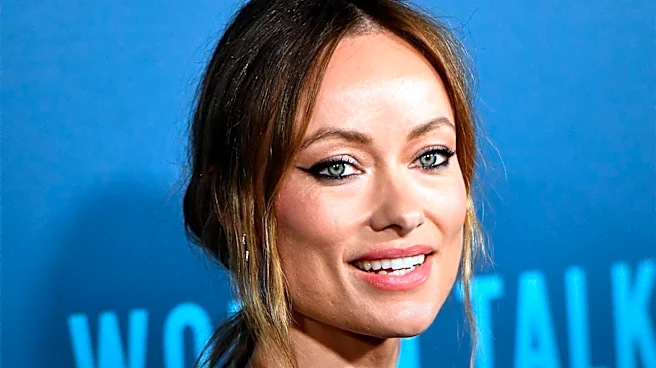
Director Olivia Wilde has publicly discussed the increasing difficulty in casting actresses who can still move their faces naturally, attributing this challenge to the widespread use of cosmetic procedures like Botox. During an appearance on Vogue's The
Run-Through podcast, Wilde expressed her struggle to find talent whose facial expressions are not limited by such treatments. She acknowledged the pressures actresses face within the industry, stating she understands their choices as a 'product of the same machine.' Wilde hopes for technological advancements that offer less aggressive cosmetic treatments, describing current methods as 'medieval.' Her comments recently resurfaced on X, sparking a broader conversation about actresses who have maintained natural facial mobility. Several actresses, including Rachel McAdams, Amanda Seyfried, Carrie Coon, Anne Hathaway, Carey Mulligan, and Emilia Clarke, were cited as examples of those who have either avoided or limited cosmetic interventions to preserve their expressive range for their craft. Amanda Seyfried, for instance, noted she had to forgo Botox for a year while filming 'The Testament of Ann Lee' to ensure her facial movements were authentic for the role.
Why It's Important?
This discussion highlights a significant concern within the U.S. entertainment industry regarding authenticity and the impact of cosmetic procedures on an actor's craft. Olivia Wilde's observations underscore a potential shift in casting preferences, where natural facial expressiveness is becoming a valued, yet increasingly rare, quality. This trend could influence how actresses approach cosmetic enhancements, potentially leading some to reconsider extensive procedures to maintain their versatility and appeal for certain roles. The conversation also reflects broader societal pressures on women in the public eye to conform to specific beauty standards, even if it compromises their professional capabilities. For audiences, the preference for 'natural' faces, as seen in the positive reception for actresses like Rachel McAdams and Carey Mulligan, suggests a growing appreciation for authenticity on screen. This could encourage a re-evaluation of beauty ideals within Hollywood, potentially fostering a more inclusive environment that values diverse and natural appearances.
What's Next?
The ongoing conversation initiated by Olivia Wilde's remarks may prompt further dialogue within the entertainment industry about the balance between cosmetic enhancements and artistic integrity. Directors and casting agents might increasingly prioritize actresses who demonstrate a full range of facial expressions, potentially influencing career trajectories and casting decisions. Actresses themselves may face renewed pressure to either embrace or resist cosmetic procedures, depending on their career goals and the types of roles they pursue. This could lead to more public discussions from actresses about their personal choices regarding cosmetic work. Furthermore, the demand for less aggressive cosmetic treatments, as voiced by Wilde, might spur innovation in the beauty and medical aesthetics industries to develop alternatives that preserve natural facial movement. The industry could also see a rise in roles specifically written to highlight or challenge conventional beauty standards, reflecting a broader cultural shift towards valuing authenticity.
Beyond the Headlines
Beyond the immediate casting challenges, this issue touches upon deeper ethical and cultural implications within the U.S. entertainment landscape. It raises questions about the long-term impact of pervasive cosmetic procedures on the art of acting, where nuanced facial expressions are crucial for conveying emotion and character. If a significant portion of the talent pool has limited facial mobility, it could inadvertently narrow the scope of performances and storytelling. Culturally, the discussion reflects a tension between the industry's demand for youth and perceived perfection, and the artistic need for authenticity and emotional depth. It also highlights the double standards often faced by women in Hollywood, who are scrutinized for both aging naturally and for undergoing cosmetic alterations. This debate could contribute to a broader cultural re-evaluation of beauty standards, encouraging a more accepting view of natural aging and diverse appearances, not just within entertainment but across society.