
What's Happening?
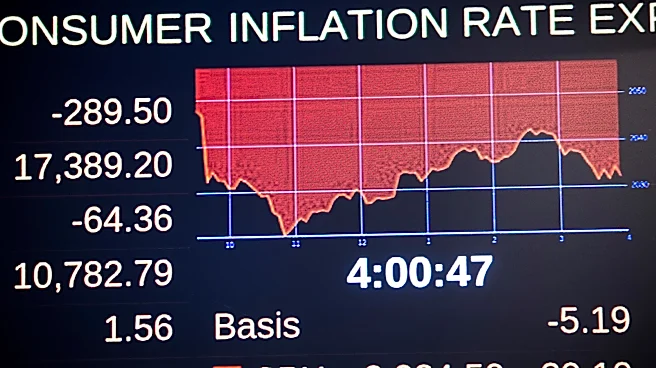
U.S. retail investors are closely observing cash and short-duration yield stocks as inflation continues to rise, with the Producer Price Index (PPI) at 6.5% and the Consumer Price Index (CPI) exceeding
expectations. This economic environment is prompting markets to anticipate further interest rate hikes by the Federal Reserve. The focus is on how these conditions will impact various stocks, particularly those sensitive to short-term yield resets. Companies like Federated Hermes, Bank of New York Mellon (BNY), and State Street (STT) are highlighted as examples of firms whose performance is being scrutinized in this context. Federated Hermes, a global investment manager, is noted for its cash management strength and growing fee streams. Bank of New York Mellon, a major player in institutional custody and cash-management, generates significant income from Securities Services and other financial activities. State Street is also mentioned as a key entity in this sector, with investors analyzing its financial health and client relationships.
Why It's Important?
The current inflationary pressures and the Federal Reserve's anticipated responses have significant implications for U.S. financial markets and retail investors. As short-term yields reset, the attractiveness of cash and short-duration yield strategies increases, potentially drawing capital away from other investment avenues. This shift can benefit companies specializing in cash management and institutional custody, such as Federated Hermes and Bank of New York Mellon, by increasing demand for their services. Conversely, other sectors might face pressure as investors reallocate their portfolios to mitigate inflation risks and capitalize on higher yields. The performance of these key financial institutions can serve as an indicator of broader market sentiment and the effectiveness of strategies designed to navigate an inflationary environment. Retail investors stand to gain from carefully selecting stocks that are resilient or even thrive during periods of rising interest rates and inflation, while those invested in more volatile or growth-oriented assets might face headwinds.
What's Next?
As inflation persists and the Federal Reserve potentially implements further interest rate hikes, the landscape for cash and short-duration yield stocks will continue to evolve. Investors will be closely watching economic data, including future PPI and CPI reports, and Federal Reserve announcements for cues on market direction. The ability of companies like Federated Hermes and Bank of New York Mellon to adapt their service offerings and maintain strong client relationships will be crucial for their sustained performance. Any shifts in client appetite for data, reporting, and regulatory support, as well as changes in the fee mix for investment managers, could significantly impact their earnings power. Retail investors will likely continue to seek out opportunities in this segment, potentially leading to increased demand for financial products and services that offer stability and yield in a challenging economic climate.
Beyond the Headlines
The heightened focus on cash and short-duration yield stocks reflects a broader re-evaluation of investment strategies in response to persistent inflation. This trend could signal a move away from riskier assets towards more conservative, income-generating investments, potentially altering the long-term composition of retail investor portfolios. The emphasis on 'richer data, reporting and regulatory support' by clients suggests an increasing demand for transparency and compliance in financial services, which could drive innovation and competition among financial institutions. Furthermore, the interconnectedness of institutional custody, cash management, and broader financial services means that shifts in one area can have ripple effects across the entire financial ecosystem. This environment also underscores the importance of financial literacy for retail investors, enabling them to make informed decisions amidst complex economic signals and evolving market conditions.