







What's Happening?
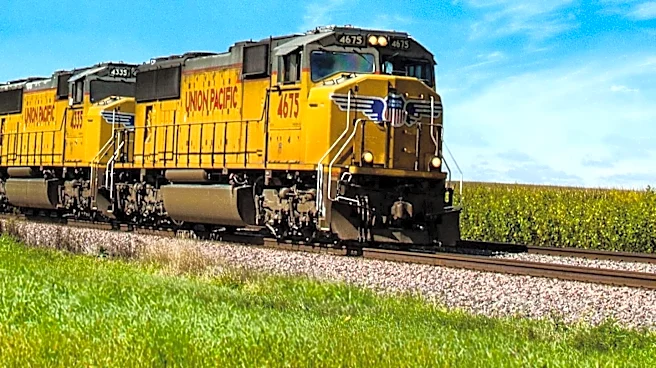
Union Pacific has reached an agreement with Canadian National to gain its support for the proposed $85 billion acquisition of Norfolk Southern railroad. This deal aims to create the first transcontinental railroad in the United States, consolidating significant
market power by controlling over 40% of rail traffic. The merger has sparked controversy within the industry, with major railroads like BNSF, CPKC, and CSX opposing it due to concerns over reduced competition. Canadian National's support was secured after Union Pacific agreed to concessions, allowing CN to serve customers who might face reduced shipping options post-merger. The U.S. Surface Transportation Board is currently reviewing the merger, requiring additional information from the involved parties. Shippers are divided, with some anticipating faster deliveries and others fearing increased rates and service issues.
Why It's Important?
The proposed merger between Union Pacific and Norfolk Southern could significantly reshape the U.S. rail industry by reducing the number of major freight railroads to five. This consolidation raises concerns about decreased competition, potentially leading to higher shipping costs and service disruptions, particularly for industries reliant on rail transport, such as chemicals and agriculture. The merger's approval could set a precedent for future consolidations in the industry, impacting market dynamics and competitive practices. While some stakeholders see potential benefits in improved efficiency and cross-country delivery speeds, others worry about the long-term implications for market competition and customer choice.
What's Next?
The U.S. Surface Transportation Board will continue its review of the merger under stringent standards established in 2001, following previous problematic rail mergers. The board's decision will hinge on whether the merger is deemed to enhance competition and serve the public interest. Union Pacific CEO Jim Vena remains optimistic about the merger's approval, citing its potential benefits for the country. However, critics argue that the merger's primary beneficiaries may be Wall Street investors rather than the companies dependent on rail services. The outcome of this review could influence future regulatory approaches to mergers in the rail industry.