




What's Happening?
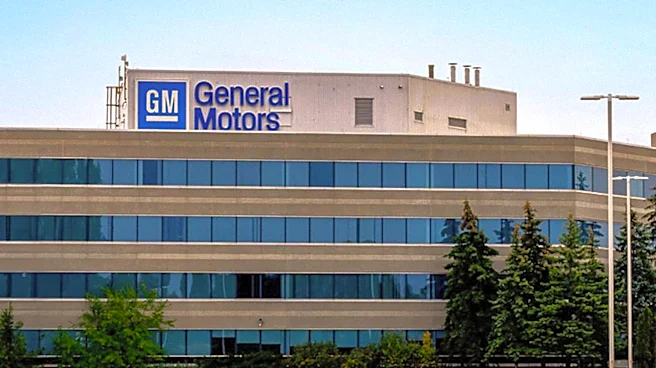
General Motors is actively recruiting a Staff Systems Engineering professional specializing in CoSim Architecture and Virtual Integration. This role is central to GM's transformation into a technology-driven company, supporting its vision of "Zero Crashes,
Zero Emissions, and Zero Congestion." The successful candidate will define and lead the end-to-end architecture for GM's scalable, domain-agnostic co-simulation and virtual integration ecosystem. This involves establishing the technical foundation for integrating embedded software, virtual ECUs, plant and behavioral models, network and vehicle services, test environments, and engineering data across various vehicle domains, programs, variants, and model years. The position is hybrid, requiring the individual to report to the Markham or Oshawa office at least three times per week. The role emphasizes a systems-thinking approach, moving between architecture, hands-on technical problem-solving, integration contracts, software and model interfaces, execution patterns, quality governance, and stakeholder alignment. The salary range for this position is between $137,300 and $203,000.
Why It's Important?
This recruitment highlights General Motors' strategic commitment to advanced virtual development and simulation technologies, which are critical for accelerating the design, testing, and validation of future vehicles. By investing in a robust co-simulation architecture, GM aims to enhance efficiency, reduce development costs, and improve the quality and safety of its automotive products. The focus on "Zero Crashes, Zero Emissions, and Zero Congestion" underscores the company's dedication to innovation in autonomous driving, electric vehicles, and connected car technologies. This initiative is vital for GM to maintain its competitive edge in a rapidly evolving automotive landscape, where software-defined vehicles and virtual engineering play an increasingly significant role. The successful implementation of this architecture will enable faster iteration cycles, more comprehensive testing, and ultimately, the delivery of more reliable and advanced vehicles to consumers, impacting the broader U.S. automotive industry by setting new standards for development processes.
What's Next?
The hiring of a Staff Systems Engineer for CoSim Architecture and Virtual Integration is a foundational step in General Motors' long-term strategy for software-defined vehicles and virtual development. The individual in this role will be responsible for setting the technical roadmap and architectural standards that will guide GM's engineering efforts for years to come. This will likely lead to increased adoption of virtual testing and simulation across all vehicle development stages, potentially reducing the need for extensive physical prototyping. Future developments will include the continuous evolution of the CoSim platform, integration of new technologies, and collaboration with various engineering teams to ensure consistent platform capabilities. The success of this initiative will be measured by the adoption and sustainability of the common CoSim architecture, improved reuse across domains, predictable integration and release of virtual assets, and stronger alignment among stakeholders. This strategic investment is expected to streamline GM's product development cycles and enhance its ability to bring cutting-edge automotive technologies to market more quickly.
Beyond the Headlines
The emphasis on a "domain-agnostic" co-simulation architecture suggests a broader shift in how automotive companies approach complex system integration. This move towards highly modular and reusable virtual environments could foster greater collaboration across different engineering disciplines and even with external suppliers. It also raises questions about the future of traditional automotive engineering roles, as virtual development skills become increasingly paramount. The ethical implications of relying heavily on virtual testing for safety-critical systems will also be a continuous consideration, requiring rigorous validation processes to ensure that virtual models accurately reflect real-world conditions. Furthermore, the development of such sophisticated virtual integration platforms could become a competitive differentiator, influencing talent acquisition and technological leadership within the global automotive industry. This approach could also pave the way for more personalized and adaptable vehicle features, as software updates and virtual testing allow for continuous improvement and customization throughout a vehicle's lifecycle.