


What's Happening?
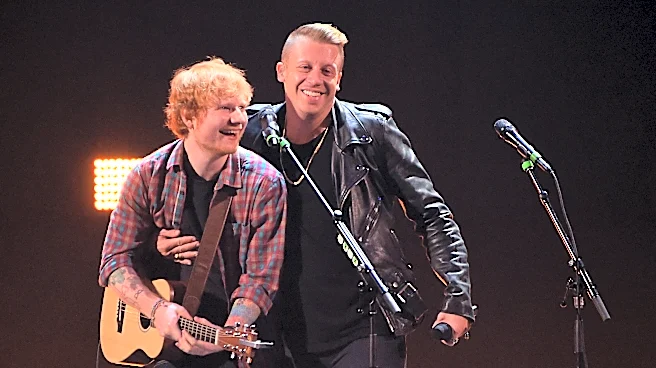
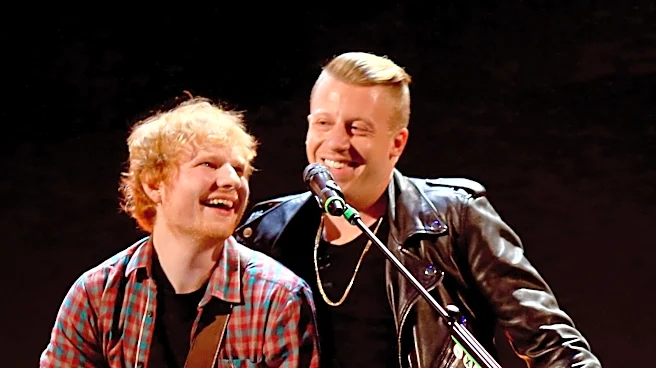
Grammy-winning rapper Macklemore has been removed from Ed Sheeran's stadium tour after making pro-Palestinian comments during a performance at MetLife Stadium in New Jersey. Macklemore announced on Instagram that several U.S. venues informed the promoter
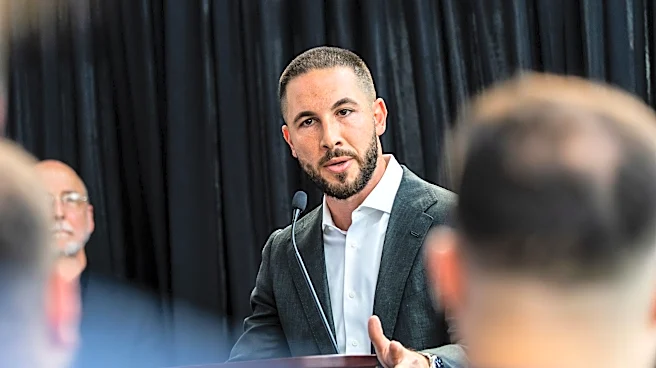
they would not allow him to perform as Sheeran's opening act, which would have led to the cancellation of the entire tour. Robert Kraft, owner of Gillette Stadium, one of the venues, stated that the decision was due to Macklemore's recent comments and a "broader history of antisemitic rhetoric and imagery." Macklemore had exclaimed "Free Palestine" and introduced his protest song "Hind's Hall," named after 5-year-old Hind Rajab, who was killed after Israeli forces fired on her family's car in Gaza. Macklemore clarified that his criticism of Israel and opposition to genocide is not a criticism of the Jewish community, emphasizing his message for peace and equality. Ed Sheeran has not commented on the situation.
Why It's Important?
This incident highlights the increasing pressure on public figures to navigate complex geopolitical issues, particularly the Israeli-Palestinian conflict, and the potential professional repercussions of taking a stance. Macklemore's removal from a major tour underscores the significant financial and reputational risks artists face when their political views clash with venue owners or promoters, especially concerning highly sensitive topics. The statement from Robert Kraft, linking Macklemore's comments to a "broader history of antisemitic rhetoric," reflects the deep divisions and strong emotions surrounding the conflict within the U.S. This situation also brings to light the power dynamics within the entertainment industry, where venues and promoters can exert considerable influence over artists' platforms. It raises questions about freedom of speech for artists and the extent to which their political expressions are tolerated or censored in commercial settings, particularly when those expressions are perceived as controversial or divisive by powerful stakeholders.
What's Next?
Macklemore's removal from the Ed Sheeran tour means he will not perform at the remaining scheduled venues, including Lincoln Financial Field in Philadelphia, Mercedes-Benz Stadium in Atlanta, and AT&T Stadium in Arlington, Texas. This event may lead to further discussions within the entertainment industry regarding artists' political activism and the boundaries of free expression. It could also prompt other artists and public figures to either be more cautious about expressing their views on sensitive topics or, conversely, to double down on their advocacy in solidarity with Macklemore. The incident is likely to continue to fuel public debate on the Israeli-Palestinian conflict and the role of celebrities in political discourse. The lack of comment from Ed Sheeran suggests a desire to distance himself from the controversy, but the event itself will remain a notable example of the intersection of music, politics, and commercial interests.
Beyond the Headlines
This situation delves into the broader societal implications of "cancel culture" and the challenges of maintaining nuanced dialogue on contentious issues. The accusation of antisemitism, often leveled against critics of Israeli policies, can effectively silence dissent and conflate criticism of a state with prejudice against a religious group. Macklemore's attempt to differentiate his criticism of Israel from antisemitism reflects a common struggle for activists and artists. The incident also highlights the economic power wielded by venue owners and corporate entities in shaping public discourse, as their decisions can significantly impact an artist's career and reach. This event serves as a case study in the ongoing tension between artistic integrity, political advocacy, and commercial viability, prompting deeper reflection on the responsibilities of public figures and the limits of free expression in a highly commercialized and politically charged environment.