





What's Happening?
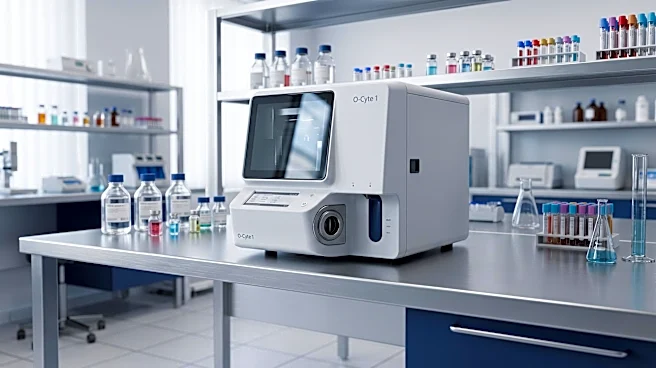
Ozelle, a Silicon Valley-based company, is set to highlight its O-Cyte 1 automated hematology analyzer at MEDICA 2026 in Düsseldorf, Germany. The O-Cyte 1 integrates AI-assisted morphology with Complete Blood Morphology (CBM) and offers scalable throughput,
designed to meet the evolving needs of routine hematology laboratories. This analyzer performs CBC testing with 7-part white blood cell differentiation, combining high-resolution cell imaging with AI-assisted classification within the same unit. Cell images are directly linked to numerical results, allowing laboratory professionals to review visual evidence as needed. The system is engineered for changing workloads, with a standalone unit processing up to 60 tests per hour, and a six-unit cascade reaching up to 360 tests per hour. Its design includes an integrated reagent kit, fluid-contact components in consumables for simplified handling, and built-in self-checks with replaceable modules for easier maintenance and fault identification.
Why It's Important?
The introduction of Ozelle's O-Cyte 1 represents a significant step forward in diagnostic healthcare technology, particularly for U.S. laboratories facing increasing demands for efficiency and accuracy. By integrating AI-assisted morphology directly into routine hematology, the system aims to standardize and improve the consistency of blood analysis, which is crucial for diagnosing various conditions, including cancer and blood disorders. The scalable nature of the O-Cyte 1 allows laboratories of different sizes and testing volumes to adopt the technology, providing a pathway for future capacity expansion. This innovation can lead to faster and more reliable diagnoses, ultimately benefiting patient care across the U.S. healthcare system. For IVD distributors, the simplified reagent management and modular design offer easier technical support and after-sales service, potentially reducing operational costs and increasing accessibility of advanced diagnostic tools.
What's Next?
Ozelle's presentation at MEDICA 2026 will serve as a platform to showcase the O-Cyte 1 to a global audience, including potential U.S. distributors and healthcare providers. The company also plans to feature its EHBT-75, which combines 7-diff hematology with cell imaging and morphology analysis, and EHBT-50, an integrated platform for hematology, immunoassay, and dry biochemistry. Additionally, Ozelle will present Open Dx, its AI Workbench for AI-assisted report review and result sharing. The International Council for Standardization in Haematology (ICSH) recently approved a new digital morphology standardization project, underscoring the industry's focus on verification, reproducibility, and quality assurance in digital morphology. This trend suggests that AI-assisted hematology will become increasingly integrated into standard laboratory practices, prompting U.S. laboratories to consider adopting such advanced systems to remain competitive and improve diagnostic capabilities.
Beyond the Headlines
The increasing integration of AI into medical diagnostics, as exemplified by Ozelle's O-Cyte 1, carries broader implications for the healthcare industry and medical professionals. While AI promises enhanced accuracy and efficiency, it also necessitates a re-evaluation of the roles of laboratory technicians and pathologists. The shift towards AI-assisted classification means that human experts may transition from primary analysis to oversight and validation, requiring new skill sets and training. Ethical considerations surrounding AI in diagnostics, such as data privacy, algorithmic bias, and the potential for over-reliance on technology, will become more prominent. Furthermore, the accessibility and cost-effectiveness of these advanced systems will be crucial for equitable healthcare delivery, particularly in underserved areas within the U.S. The long-term impact on medical education and the regulatory landscape for AI-driven diagnostic tools will also be significant, shaping how future medical professionals are trained and how new technologies are approved and implemented.