








What's Happening?
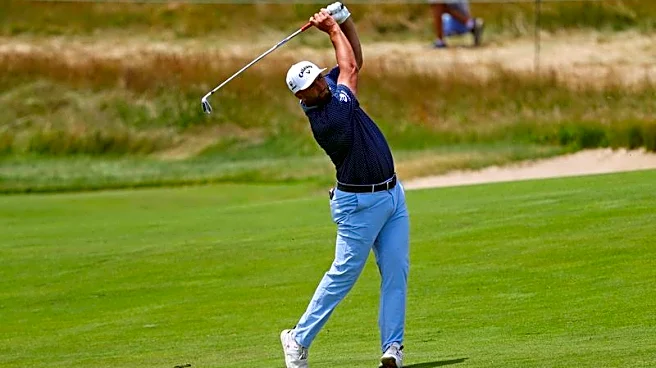
Cameron Young, a professional golfer, recently shared insights into his golfing techniques and personal approach to the sport. During a 45-minute session, Young discussed various aspects of his game, including his warm-up routine, equipment preferences,
and mental strategies. He emphasized the importance of starting his warm-up with a 62-degree wedge to improve his short game, a change he made after realizing his partial wedge shots were lacking. Young also highlighted his commitment to a draw shot shape, which he finds more practical than trying to master every shot type. Additionally, he shared his preference for a simple pre-round routine, avoiding heavy lifting and focusing on stretching and light exercises. Young's approach to golf is deeply rooted in his childhood experiences, having grown up playing on a short course where his father was the head pro. He values the process and consistency in his game, both on and off the course.
Why It's Important?
Cameron Young's insights offer valuable lessons for both amateur and professional golfers. His emphasis on focusing on specific aspects of the game, such as the draw shot and short game improvement, highlights the importance of tailoring one's approach to individual strengths and weaknesses. Young's commitment to a consistent routine and mental preparation underscores the significance of psychological resilience in sports. His experiences reflect broader trends in professional golf, where players increasingly prioritize mental coaching and personalized training regimens. Young's story also illustrates the impact of early exposure and familial support in developing athletic talent, a factor that can influence future generations of golfers. By sharing his journey, Young provides a relatable narrative that can inspire aspiring golfers to refine their techniques and embrace a process-oriented mindset.
What's Next?
As Cameron Young continues to refine his game, his focus on consistency and process is likely to influence his performance in upcoming tournaments. His commitment to a draw shot and tailored warm-up routine may lead to improved results on the PGA Tour. Young's approach could also inspire other golfers to adopt similar strategies, potentially impacting training methods and coaching practices within the sport. As he gains more experience, Young may further develop his mental game, which could enhance his competitiveness at the highest levels. Additionally, his insights may contribute to broader discussions on the importance of mental preparation and personalized training in professional sports.