





What's Happening?
Kazakhstan plans to invest an estimated $327 million to expand two key oil pipelines directed towards China. This initiative, unveiled during a virtual presentation at the Kazakhstan Stock Exchange by KazTransOil as part of its 2026–2030 investment plan,
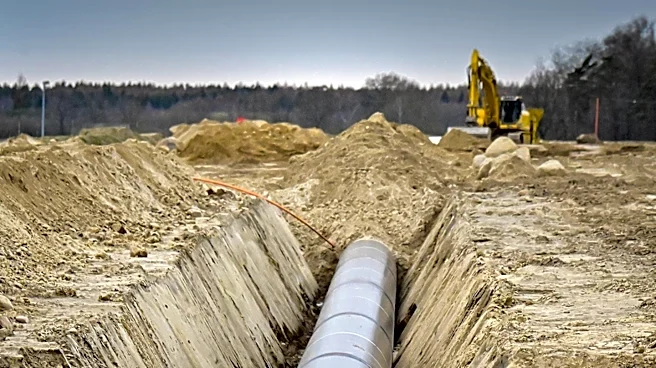
aims to increase the country's annual oil export capacity to China to 35 million tons. The project will be primarily funded through borrowing. The expansion targets two main segments: the Kenkiyak-Atyrau pipeline, which will see its capacity increase from approximately 6 million tons to 15 million tons annually, and the Kenkiyak-Kumkol pipeline, expanding from 10 million tons to 20 million tons per year. Five new oil pumping stations will be constructed to support the increased throughput. The Kenkiyak-Atyrau pipeline serves both domestic processing facilities and export logistics, while the Kenkiyak-Kumkol pipeline is a crucial link in the eastern transit corridor connecting to the Atasu-Alashankou pipeline into China.
Why It's Important?
This significant investment by Kazakhstan underscores its strategic pivot to strengthen eastern trade routes and secure alternative export channels amidst disruptions on other international routes. For the U.S. and global energy markets, this expansion could contribute to a more diversified global oil supply, potentially influencing international oil prices and energy security dynamics. Increased oil flow to China from Kazakhstan could reduce China's reliance on other sources, impacting geopolitical energy strategies. The project highlights the ongoing efforts by Central Asian nations to leverage their energy resources for economic growth and regional influence. It also demonstrates the continued importance of pipeline infrastructure in facilitating international energy trade and the strategic value of such projects in shaping global energy flows. The investment signals Kazakhstan's commitment to becoming a more prominent player in the international oil market, particularly in meeting the growing energy demands of Asian economies.
What's Next?
The project is slated for the 2026–2030 investment period, with funding primarily secured through borrowing. While the $327 million figure brings the venture closer to execution, final costs are subject to adjustments based on detailed engineering designs and formal financing agreements. The expansion is expected to significantly boost Kazakhstan's oil export capabilities to China, potentially leading to increased trade volumes and stronger economic ties between the two nations. Kazakhstan is also broadening its footprint as a regional energy transit hub, as evidenced by its recent initiation of oil deliveries to the Kyrgyz Republic. These developments suggest a continued focus on enhancing energy infrastructure and diversifying export markets, which could further solidify Kazakhstan's position in the global energy landscape. The success of this expansion could encourage further investments in similar cross-border energy projects in the region.
Beyond the Headlines
The pipeline expansion project carries deeper implications beyond immediate economic benefits. It reflects a broader geopolitical strategy by Kazakhstan to enhance its energy independence and reduce reliance on traditional Western-dominated export routes. By strengthening its energy ties with China, Kazakhstan is strategically positioning itself within the evolving global power dynamics. This move could also have environmental implications, as increased oil transportation necessitates robust safety and environmental protection measures along the pipeline routes. Furthermore, the project highlights the ongoing competition among global powers for influence and access to energy resources in Central Asia. The long-term success of such infrastructure projects will depend not only on economic viability but also on political stability, regional cooperation, and adherence to international environmental standards. This investment is a tangible manifestation of the eastward shift in global energy focus.