



What's Happening?
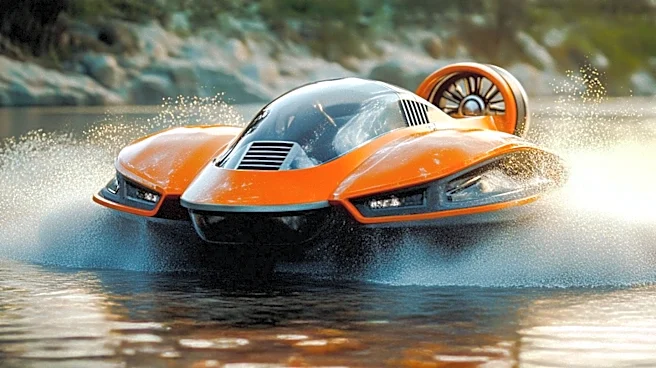
WaterCar, Inc., a manufacturer of amphibious vehicles, has made a strategic decision to exclusively use outboard motors, specifically the 115 HP Mercury Pro XS, for its recreational platforms. This choice stems from extensive experience, including founder
Dave March's previous work with jet drives in record-setting prototypes like the WaterCar Python. While jet drives offered extreme water speeds, they proved impractical for daily recreational use due to issues like debris ingestion, intake clogging, and complex maintenance. Outboard motors, in contrast, offer superior low-speed control, better fuel efficiency, easier maintenance, and greater reliability in varied marine environments, including shallow, weedy, or sandy areas. The company's design integrates the outboard with a patented system that includes a tri-hull V-bottom and retracting wheels, optimizing performance and user experience.
Why It's Important?
WaterCar Inc.'s decision to standardize on outboard motors for its amphibious vehicles holds significant implications for the recreational marine and specialized vehicle industries in the U.S. This move highlights a practical shift from high-performance, complex engineering to user-friendly reliability, which can broaden the market appeal of amphibious vehicles. For consumers, it means a more dependable and easier-to-maintain product, potentially reducing ownership costs and increasing accessibility. For the marine industry, it reinforces the versatility and continued relevance of outboard technology, even in niche applications like amphibious craft. This could also influence other manufacturers to prioritize practical considerations over raw performance in specialized vehicle design. The emphasis on ease of serviceability through standard Mercury dealerships also creates a robust support network, enhancing customer confidence and potentially driving sales. This strategic choice by WaterCar Inc. could set a new standard for the design and engineering of amphibious recreational vehicles, impacting future market trends and consumer expectations.
What's Next?
Following WaterCar Inc.'s commitment to outboard motors, the company is expected to continue refining its amphibious vehicle designs to further optimize the integration of the Mercury Pro XS engine. This could involve enhancements to the hull design, retraction mechanisms, and control systems to maximize efficiency and performance. The focus on reliability and ease of maintenance suggests a potential for increased market penetration, as more consumers may be willing to invest in an amphibious vehicle that is less prone to operational issues. Other manufacturers in the specialized vehicle market may observe WaterCar Inc.'s success and consider similar shifts in their propulsion strategies, particularly if they aim for broader consumer appeal. The company will likely continue to leverage its global service integration with Mercury, ensuring that owners have access to widespread support. Future developments might also include exploring electric outboard options as marine propulsion technology evolves, aligning with growing environmental consciousness and demand for sustainable solutions.
Beyond the Headlines
WaterCar Inc.'s pivot from jet drives to outboard motors for its amphibious vehicles reveals a deeper trend in product development: the prioritization of user experience and practicality over extreme performance. While the allure of record-breaking speeds is undeniable, the challenges of maintenance, reliability, and real-world usability often dictate long-term market success. This decision reflects a mature understanding of the recreational market, where convenience and dependability are often more valued than cutting-edge, but temperamental, technology. Ethically, this move aligns with a consumer-centric approach, ensuring that products are not only innovative but also sustainable in terms of ownership and environmental impact. The choice of a widely serviceable engine like the Mercury Pro XS also democratizes access to specialized vehicles, making them less intimidating for the average consumer. This could foster a new cultural appreciation for amphibious vehicles, moving them from niche engineering marvels to more mainstream recreational tools, thereby expanding the 'waterfront lifestyle' to a broader audience.