





What's Happening?
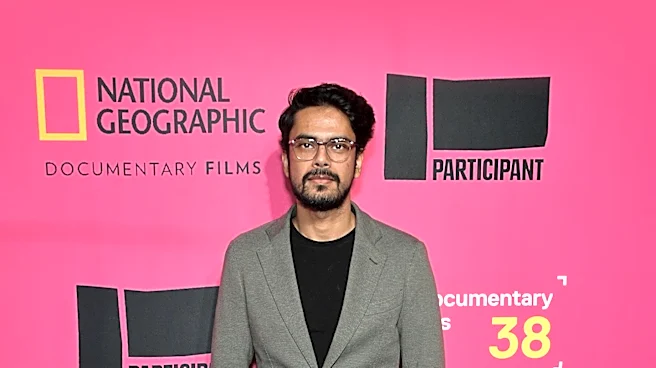
The documentary film 'NAZA,' directed by Yuval Abraham and Rachel Shor, has garnered three nominations for the 39th European Film Awards. The nominations, announced by the European Film Academy at the International Film Festival in Thessaloniki, include
Best European Film, Best Documentary Film, and Best Sound. This recognition follows the film's win of the Special Jury Prize at the 83rd Venice International Film Festival on September 12, 2026. Produced by The Guardian and JW Films, 'NAZA' has been described by Deadline magazine as a 'shocking investigation.' The film has attracted over 1.5 million viewers globally since its Venice debut. Its content, which features anonymous testimonies from individuals claiming to be IDF personnel discussing Israeli military targeting decisions in Gaza and alleged 'mass killing on an industrial scale,' has generated significant controversy. The European Film Awards ceremony is scheduled for January 16, 2027, in Athens.
Why It's Important?
The multiple nominations for 'NAZA' at the European Film Awards highlight the film's significant impact within the international cinematic community, particularly in the documentary category where all five nominees were also considered for Best Film. The film's controversial nature, stemming from its focus on anonymous testimonies regarding sensitive military operations, underscores ongoing debates about journalistic ethics, freedom of expression, and the portrayal of conflict. Its widespread viewership, exceeding 1.5 million, indicates a substantial public interest in the narrative it presents, potentially influencing public opinion and discourse on the Israeli-Palestinian conflict. The film's continued recognition despite the controversy also reflects a broader trend in film festivals and awards to acknowledge works that tackle challenging and sensitive geopolitical subjects, even if they provoke strong reactions.
What's Next?
The next significant event for 'NAZA' will be the 39th European Film Awards ceremony on January 16, 2027, in Athens, where it will compete in three major categories. The outcome of these awards could further elevate the film's profile and potentially increase its global distribution and viewership. Continued discussion and debate surrounding the film's content and methodology are also anticipated, especially given its controversial nature. The film's success in securing nominations despite the backlash it received at the Venice Film Festival suggests that it will remain a focal point for discussions on documentary filmmaking, conflict reporting, and the role of media in shaping public perception. Future screenings, academic discussions, and critical analyses are likely to follow, extending the film's impact beyond the awards season.
Beyond the Headlines
The controversy surrounding 'NAZA' delves into deeper implications concerning the ethics of anonymous sourcing in documentary filmmaking, particularly when dealing with highly sensitive geopolitical issues. The film's reliance on unnamed individuals claiming to be from top intelligence units raises questions about verification and potential biases, which can significantly impact public trust and the credibility of media. The backlash it received, including graffiti labeling the directors as 'traitors,' highlights the intense emotional and political polarization that such narratives can ignite. This situation underscores the challenges faced by filmmakers and journalists who aim to shed light on contentious subjects, often navigating between the pursuit of truth and the risk of fueling existing conflicts or being accused of bias. The film's journey from Venice to the European Film Awards serves as a case study in how art can intersect with politics, ethics, and public discourse on a global scale.