
What's Happening?
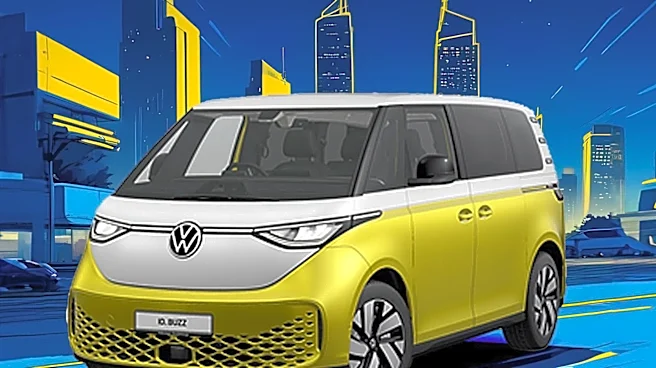
U.S.-based May Mobility plans to deploy more than 10,000 all-electric Volkswagen ID. Buzz vehicles as autonomous robotaxis in international markets by 2031. This initiative involves developing a specialized
version of the electric van to integrate May Mobility's Autonomous Driving Kit (ADK). The autonomous driving system will be developed in collaboration with automotive technology company ECARX, with Charlton Intelligence.ai assisting in vehicle deployment and the development of robotaxi fleets. Initial road testing in the United States is slated for early 2027, and deliveries of the first production vehicles are anticipated to commence in 2028. May Mobility currently operates commercial ride services in Atlanta (with Lyft), Eden Prairie, and Grand Rapids, Minnesota, and plans to launch an autonomous ride service with Uber in Arlington, Texas, in 2027. The company also initiated a six-month pilot project with NTT Mobility in Nagoya, Japan, in September 2026.
Why It's Important?
This significant deployment of autonomous robotaxis by May Mobility underscores a major step forward in the commercialization and widespread adoption of self-driving technology in the U.S. and globally. The partnership with Volkswagen, a major automotive manufacturer, provides May Mobility with a scalable and suitable vehicle platform, potentially accelerating the transition to autonomous public transportation. The company's goal to reduce total costs by over 50 percent compared to its previous vehicle generation, through collaborations with ECARX and Charlton Intelligence.ai, could make autonomous ride services more economically viable and accessible. For U.S. cities like Arlington, Texas, the planned launch of an autonomous ride service with Uber signifies an expansion of innovative transportation options, potentially easing traffic congestion and offering new mobility solutions. The international expansion also positions U.S. autonomous vehicle technology as a key player in the global market.
What's Next?
May Mobility is scheduled to begin initial road testing of the autonomous VW ID. Buzz vehicles in the United States in early 2027, with the first production vehicle deliveries expected in 2028. The company also plans to launch its autonomous ride service with Uber in Arlington, Texas, in 2027. Further details regarding the robotaxi version's sensors, battery capacity, and driving range are yet to be released. The success of these initial deployments and tests will be crucial for the broader rollout of the 10,000-vehicle fleet by 2031. The ongoing pilot project in Nagoya, Japan, will also provide valuable data and insights for international expansion. The company's strategy of leveraging AI-powered predictive models for analyzing traffic situations will continue to be refined as more real-world data is collected.
Beyond the Headlines
The deployment of a large fleet of autonomous robotaxis like the VW ID. Buzz by May Mobility could have profound long-term implications for urban planning, labor markets, and environmental sustainability. The shift towards electric, autonomous vehicles could significantly reduce carbon emissions and noise pollution in cities, contributing to cleaner urban environments. However, it also raises questions about the future of traditional taxi and ride-sharing drivers, potentially leading to job displacement and requiring new workforce training initiatives. The ethical considerations surrounding AI-powered decision-making in autonomous vehicles, particularly in complex traffic scenarios, will also become increasingly prominent. Furthermore, the integration of such a large-scale autonomous fleet will necessitate robust regulatory frameworks and public acceptance to ensure safety and efficiency, potentially reshaping how urban populations commute and interact with transportation services.