





What's Happening?
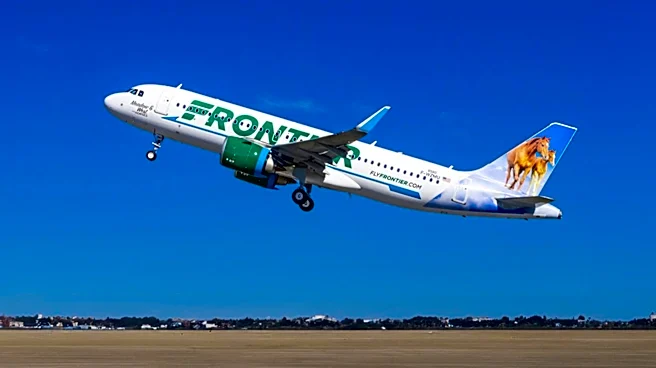
Frontier Airlines has reported a substantial increase in its base fares, with passengers paying approximately 71% more between July and September compared to the previous year. This surge is attributed to a combination of factors, including high jet fuel
costs and the recent collapse of Spirit Airlines. According to Frontier CEO James Dempsey, the increase in revenue is equally due to improved revenue management strategies, the absence of Spirit Airlines, and rising fuel prices. Industry-wide, ticket prices in September were up about 22% over last year, with Thanksgiving fares seeing a 30% increase. Despite these higher fares, Frontier's planes in the third quarter were only slightly less full than last year, indicating a continued willingness from passengers to pay more. Delta Air Lines CEO Ed Bastian also commented on the industry's desire to sustain higher revenues even if fuel prices decline.
Why It's Important?
The reported airfare surge by Frontier Airlines and the broader industry trend of increasing ticket prices have significant implications for U.S. consumers and the airline sector. For consumers, this means higher travel costs, particularly impacting holiday travelers. The collapse of Spirit Airlines, a major low-cost carrier, has reduced competition, potentially leading to sustained higher prices for budget-conscious travelers. For the airline industry, the ability to maintain higher fares even as fuel costs fluctuate suggests a shift in pricing strategy, prioritizing revenue generation over maximizing passenger volume. This could lead to increased profitability for airlines, but at the expense of affordability for the flying public. The comments from Delta Air Lines CEO Ed Bastian underscore a collective industry sentiment towards preserving elevated revenue levels, indicating that current fare trends may not easily reverse.
What's Next?
Frontier Airlines is optimistic about its financial performance in 2027, despite reporting a $104 million loss in the third quarter due to high jet fuel costs. The airline plans to introduce new first-class seats 'imminently,' with sales expected to begin for flights departing by early spring. Additionally, Frontier intends to start installing Starlink Wi-Fi on its aircraft in early 2027, a significant upgrade as the airline previously offered no in-flight internet. The question of whether the Wi-Fi service will be free remains unanswered, as Frontier has historically charged for add-on services. The airline's strategy to introduce premium offerings like first-class and Wi-Fi aims to attract more passengers and improve its financial standing, potentially shifting its market position within the budget airline segment.
Beyond the Headlines
The current trend of rising airfares and the airline industry's stated intent to maintain higher revenues, even with fluctuating fuel prices, points to a potential long-term shift in the economics of air travel. The consolidation within the low-cost carrier segment, exemplified by Spirit Airlines' collapse, reduces competitive pressure, allowing remaining airlines more pricing power. This could lead to a less accessible air travel market for some consumers, potentially impacting leisure travel and the overall mobility of the U.S. population. The industry's focus on sustaining revenue, as articulated by Delta Air Lines CEO Ed Bastian, suggests a strategic pivot towards profitability and yield management, which may redefine the value proposition for air travel in the coming years. This could also spur innovation in ancillary services and loyalty programs as airlines seek to differentiate themselves beyond just price.