




What's Happening?
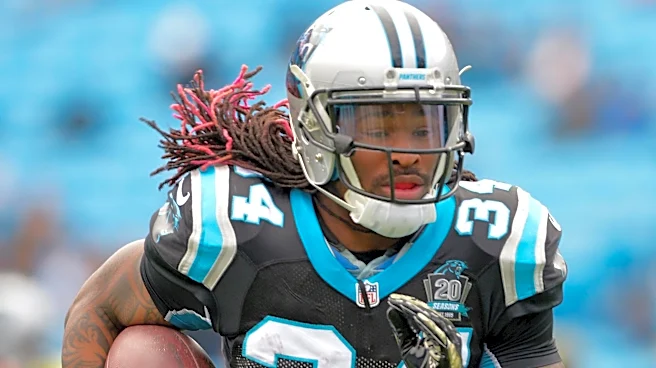
Former Carolina Panthers linebacker Thomas Davis has publicly disclosed his struggle with opioid addiction, which he attributes to the pain from multiple career-ending injuries. This addiction, which he discussed for the first time on 'The Pivot Podcast,'
led to the breakup of his marriage and tarnished his previously pristine reputation. The Associated Press reports that prescriptions obtained to fuel Davis's addiction were central to a Drug Enforcement Administration (DEA) investigation into Joan Rubinger, a self-proclaimed healer who allegedly provided over 13,000 pills of oxycodone and Percocet to Davis between November 2019 and March 2024. Davis, known for his community work and resilience on the field, including playing in the 2016 Super Bowl with a broken arm, now acknowledges the profound impact of his drug dependency on his life and family. His former wife, Kelly Davis, accused Rubinger of preying on athletes with injuries, money, and mental health issues.
Why It's Important?
This revelation by Thomas Davis highlights the significant and often hidden issue of opioid addiction among professional athletes, particularly in high-impact sports like the NFL. Davis's story underscores the long-term physical and psychological toll that professional sports can take, leading athletes to seek pain relief through potentially addictive substances. The involvement of Joan Rubinger and the DEA investigation points to a broader problem of illicit drug distribution within sports circles, raising questions about the oversight and support systems available to athletes. The NFL has a documented history with painkiller use, and while the league has enhanced its monitoring of prescriptions, Davis's case suggests that vulnerabilities persist. This situation impacts not only the individuals involved but also the public perception of athlete welfare and the integrity of sports. It also brings to light the challenges families face when a loved one battles addiction, as evidenced by the impact on Davis's marriage and his children.
What's Next?
Thomas Davis is now focused on making amends with his children and has stated he has received the necessary help for his addiction. His public admission may encourage other athletes struggling with similar issues to seek help and could prompt further discussions within the NFL and other sports organizations about comprehensive athlete support programs, including mental health and addiction services. The DEA investigation into Joan Rubinger is ongoing, and further legal actions or revelations regarding her practices and other athletes involved could emerge. This case may also lead to increased scrutiny of individuals and networks that facilitate access to controlled substances for athletes. For Davis, his journey will likely involve continued recovery and efforts to rebuild trust and relationships, particularly with his family. His story serves as a cautionary tale and a potential catalyst for change in how athlete pain management and addiction are addressed.
Beyond the Headlines
Thomas Davis's story delves into the complex ethical and societal dimensions surrounding professional sports, particularly the pressure on athletes to perform despite severe injuries. The narrative of his resilience, marked by multiple comebacks from torn ACLs, inadvertently created a pathway to addiction, revealing the dark side of 'toughness' in sports culture. This case raises questions about the responsibility of sports leagues and teams in preventing and addressing substance abuse among players, especially when injuries are a direct consequence of their profession. The involvement of a 'healer' like Joan Rubinger also highlights the unregulated and potentially dangerous avenues athletes might explore for pain management outside conventional medical channels. Furthermore, the impact on Davis's family, including his divorce and his former wife's arrest, illustrates the ripple effect of addiction beyond the individual, affecting personal lives and public image. This situation underscores the need for a holistic approach to athlete well-being that extends beyond their playing careers, addressing their physical, mental, and emotional health.