




What's Happening?
Tata Electronics, a prominent player in India's electronics and semiconductor manufacturing sector, has signed a Memorandum of Understanding (MoU) with Sumitomo Chemical, a major Japanese chemical company. This collaboration aims to bolster India's semiconductor supply
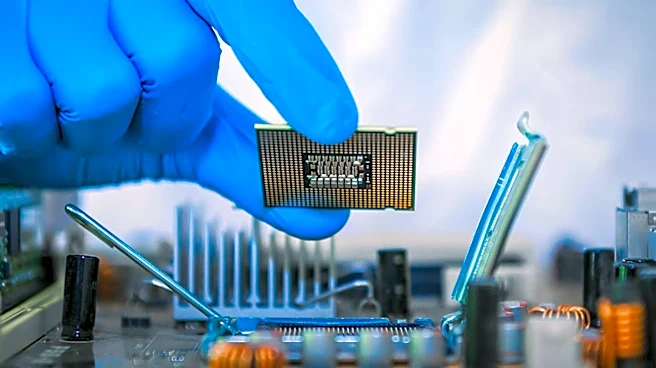
chain by ensuring the availability of high-quality materials. Under the MoU, Sumitomo Chemical will supply various semiconductor materials, including photoresists, functional chemicals, and high-purity chemicals like hydrogen peroxide, isopropyl alcohol, ammonia water, and sulfuric acid, to Tata Electronics' upcoming 12-inch (300 mm) semiconductor fabrication plant in Dholera, Gujarat. Additionally, Tata Electronics will support Sumitomo Chemical in exploring the local manufacturing of these semiconductor materials and high-purity chemicals within India. This partnership is a strategic step towards strengthening the domestic ecosystem for semiconductor manufacturing, encompassing materials, equipment, and process and design technologies, and aligns with India's goal of becoming a leader in semiconductor production.
Why It's Important?
This partnership is significant for the U.S. and global semiconductor industry as it contributes to the diversification and resilience of the semiconductor supply chain. The U.S. has a vested interest in a stable and secure global supply of semiconductors, as these components are critical for numerous American industries, including technology, automotive, and defense. By strengthening India's domestic manufacturing capabilities and ensuring a reliable supply of high-quality materials, this collaboration helps to reduce the global industry's dependence on a limited number of suppliers and regions. This can mitigate risks associated with geopolitical tensions, trade disruptions, or natural disasters that could impact the availability of essential materials. For U.S. companies that rely on a robust global semiconductor ecosystem, this development means potentially more stable pricing, reduced lead times, and greater assurance of supply. Furthermore, the growth of India's semiconductor sector, supported by international partnerships, can foster innovation and create new opportunities for collaboration and market expansion for U.S. technology firms. The emphasis on local manufacturing of materials also contributes to a more self-sufficient and robust global supply chain, benefiting all stakeholders.
What's Next?
Following the signing of the MoU, the next phase will involve the detailed planning and execution of the supply agreements between Tata Electronics and Sumitomo Chemical. This will include establishing logistics for material supply to the Dholera fab and initiating feasibility studies for local manufacturing of chemicals in India. Tata Electronics will continue the rapid construction of its 12-inch semiconductor fab, which is designed to produce chips for a wide range of applications, including automotive, mobile devices, and Artificial Intelligence. The company will also likely continue to forge strategic partnerships with other global customers and ecosystem companies to further integrate its operations into the global semiconductor value chain. Sumitomo Chemical will leverage its technological expertise to ensure the continuous availability of high-performance, high-quality materials. This collaboration is expected to serve as a model for future international partnerships aimed at strengthening India's semiconductor manufacturing ecosystem, with potential for further investments and technological advancements in the region.
Beyond the Headlines
The collaboration between Tata Electronics and Sumitomo Chemical has broader implications beyond immediate supply chain benefits. It signifies a strategic shift towards building a more geographically diversified and resilient global semiconductor industry. For the U.S., this means a potential reduction in systemic risk within the tech sector, as critical components and materials become available from a wider array of trusted sources. This move also underscores the increasing importance of India as a strategic partner in global technology and manufacturing. The emphasis on local manufacturing of high-purity chemicals and materials in India could lead to the development of a more comprehensive domestic ecosystem, fostering local expertise and reducing environmental footprints associated with long-distance transportation. Ethically, this partnership promotes sustainable development by creating high-tech jobs and contributing to economic growth in India. Culturally, it strengthens the technological and economic ties between India and Japan, and by extension, with the broader global community, including the U.S. In the long term, such collaborations are essential for navigating future technological challenges and ensuring the continuous advancement of digital societies worldwide.