




What's Happening?
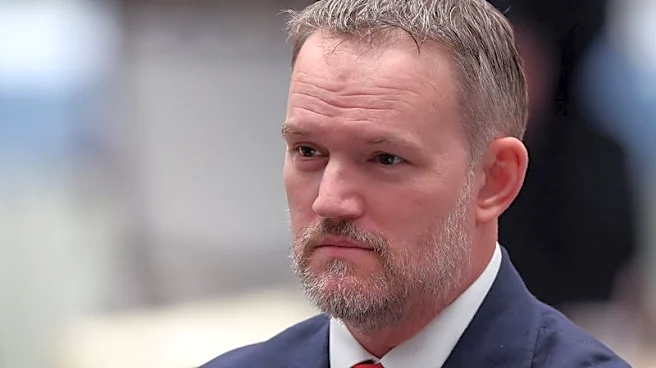
Hilton CEO Chris Nassetta highlights the company's strategic advantage in franchising its brand, which enables growth with minimal capital investment. According to Nassetta, Hilton currently accounts for less than 6% of the global room supply, indicating
significant potential for expansion. This perspective is part of a broader analysis suggesting that Hilton, alongside Ferrari and Amer Sports, possesses the brand power and growth runways to potentially outperform the S&P 500 over the next decade. Despite this optimistic outlook, the hospitality sector faces inherent cyclicality, as evidenced by a 5.4% decline in China's Revenue Per Available Room (RevPAR) last quarter and ongoing impacts from Middle East conflicts. Hilton's shares are currently trading at approximately 49 times earnings, reflecting a premium valuation.
Why It's Important?
The insights from Hilton CEO Chris Nassetta are significant for investors and the broader hospitality industry, as they underscore the value of a capital-light franchising model in achieving sustained growth. Hilton's strategy allows it to expand its global footprint without the heavy asset ownership costs typically associated with hotel operations, potentially leading to higher profitability and resilience. The comparison with other strong consumer brands like Ferrari and Amer Sports suggests a shared characteristic of pricing power, where customers are willing to pay a premium for the brand. This ability to maintain pricing power is crucial for long-term financial performance, especially in a competitive market. However, the cyclical nature of travel and geopolitical events pose risks, indicating that even strong brands must navigate external challenges that can impact short-term performance.
What's Next?
For Hilton, the focus will likely remain on leveraging its brand strength and franchising model to continue expanding its global room supply. The company will need to closely monitor and adapt to regional market fluctuations, such as the RevPAR trends in China and the impact of geopolitical events in the Middle East. Investors will be watching to see if Hilton can maintain its growth trajectory and justify its current valuation amidst these challenges. The long-term projection of outperforming the S&P 500 will depend on the company's ability to consistently execute its growth strategy and demonstrate resilience against market cyclicality. Continued emphasis on customer loyalty and brand differentiation will be key to sustaining its pricing power and market position.
Beyond the Headlines
The discussion around Hilton's brand power and growth potential extends beyond immediate financial metrics, touching upon the evolving dynamics of the global hospitality industry. The emphasis on a franchising model reflects a broader trend in various sectors where companies prioritize brand management and intellectual property over direct asset ownership. This approach can foster a more agile and scalable business, but it also places a greater reliance on the performance and adherence to brand standards by franchisees. The ability of a brand to command premium pricing, as highlighted by Nassetta, speaks to the intangible value of reputation, customer experience, and perceived quality. In an increasingly competitive global market, the strength of a brand can be a critical differentiator, influencing consumer choices and ultimately, long-term financial success.